
Savani Quintanilla: The Story Behind A.B. Quintanilla III’s Son and His Rise in Latin Music
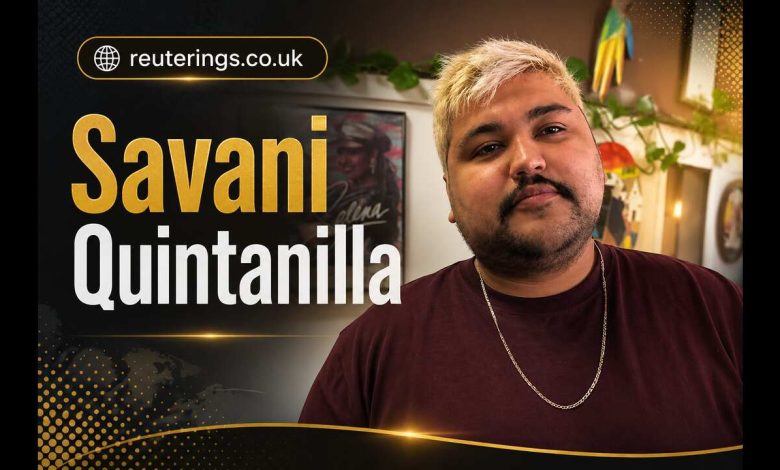
If you have spent any time following Latin music family trees, you have probably come across the name Savani Quintanilla. He carries one of the most recognized last names in Tejano music history, and that alone makes people curious about who he is and what he is doing with his life. But Savani Quintanilla is not just a name attached to a famous family. He is building something of his own, one beat and one project at a time.
In this post, we are going to walk through who Savani Quintanilla really is, where he came from, how his family shaped him, and what his career looks like today. Grab a coffee and settle in, because there is a lot more to this story than a simple family connection.
Who Is Savani Quintanilla?
Savani Quintanilla is an American musician, DJ, producer, and sound engineer who works under the stage name Principe Q. He was born on November 27, 1991, in Texas, and he grew up in a household where music was not a hobby. It was the family business.
His approach to music blends traditional Latin sounds, especially cumbia and Tejano rhythms, with modern genres like trap and electronic beats. That mix has slowly earned him attention as a fresh voice trying to carry his family’s musical legacy into a new generation without simply copying what came before him.
Savani Quintanilla’s Family Background
Savani Quintanilla is the son of A.B. Quintanilla III, a bassist, songwriter, and producer known for his work with Selena y Los Dinos and later for founding Kumbia Kings and Kumbia All Starz. His mother is Evangelina Almeida, who was A.B. Quintanilla’s first wife.
That family connection runs even deeper. Savani is the nephew of the late Selena Quintanilla, the singer widely remembered as the Queen of Tejano Music. Her influence on Latin music never faded, even decades after her passing in 1995, and that legacy has shaped how people view every member of the Quintanilla family, including Savani.
He is not an only child either. Savani has a biological sister named Martika, born in 1989, along with several half siblings from his father’s other relationships. Family gatherings in this household were likely never short on music, stories, or creative energy.
Growing Up in Corpus Christi
Savani Quintanilla was raised largely in Corpus Christi, a city with deep roots in Tejano and Latin music culture. It is the same city closely tied to Selena’s own rise, so in many ways, Savani grew up walking through the same streets and hearing the same sounds that shaped his aunt’s career.
His childhood home was filled with rehearsals, recording sessions, and the constant hum of a working music family. Even before he understood what he was witnessing, he was absorbing lessons about songwriting, sound, and performance simply by being present.
A Mexican American Household Full of Rhythm
Growing up in a Mexican American family added another layer to his upbringing. Cumbia rhythms, Tejano sounds, and traditional Latin instrumentation blended naturally with the more modern genres he later discovered as a teenager.
That early exposure gave him a foundation most young producers spend years trying to build. He did not have to search for his sound from scratch. He inherited pieces of it and then spent years shaping those pieces into something that felt like his own.
How Savani Quintanilla Got Into Music
Music was not always the obvious path for Savani. During high school, he actually played football, taking on the position of left tackle. On paper, that looks like a very different direction from producing beats and DJing at clubs.
But his heart was not fully in sports. The real turning point came earlier than high school. When Savani was in fifth grade, his father gave him his first bass guitar. That single gift quietly planted a seed that eventually grew into a full career.
From Bass Guitar to the DJ Booth
Once music started calling louder than football, Savani leaned into it. He began working small gigs and club nights as a DJ, learning the craft in real environments rather than only through theory.
With help from a close friend named Dusty, along with access to home recording studios, he started learning the basics of beat making and sound production. He was not content with simply mimicking other producers. He wanted to figure out what made a track feel distinct.
Building Skills Through Hands-On Experience
Specific details about Savani Quintanilla’s formal education remain fairly private, and most public information suggests his real training came from experience rather than a classroom. Growing up around professional musicians and working studios gave him direct access to production techniques most people only read about.
He spent his teenage years experimenting with beats and remixes at local events, slowly sharpening his instincts for rhythm, timing, and crowd engagement. Over time, that hands on approach evolved into more structured music production work, where he began combining technical skill with genuine artistic expression.
Savani Quintanilla’s Musical Style and Sound
What makes Savani Quintanilla stand out is not that he plays it safe with his family’s legacy. He takes traditional Latin sounds and pushes them into unexpected territory.
His work often blends:
- Traditional cumbia rhythms rooted in Tejano music history
- Modern trap production techniques
- Electronic beats and contemporary sound design
- Latin fusion elements that nod to his family’s influence
That combination allows him to appeal to listeners who grew up on classic Tejano sounds while also reaching younger audiences who are more familiar with trap and electronic production.
Honoring Selena’s Legacy Through His Work
Savani Quintanilla has spoken about how his late aunt Selena continues to inspire his approach to music. Her work ethic, her talent, and her deep connection to Latin culture serve as a reference point for how he wants to carry the family name forward.
Through remixes and original productions, he pays tribute to her impact while still pushing his sound into modern territory. It is less about recreating what she did and more about honoring the spirit behind it.
A.B. Quintanilla III’s Influence on His Son’s Career
It would be difficult to talk about Savani Quintanilla without spending real time on his father, A.B. Quintanilla III. A.B. is one of the most influential figures in Latin music, known for his bass playing, songwriting, and production work with Selena y Los Dinos.
After Selena’s death, A.B. continued shaping Latin music through Kumbia Kings and later Kumbia All Starz, groups that helped define a modern era of cumbia and Latin pop fusion. Growing up watching his father build and rebuild musical projects gave Savani a front row seat to what a long term career in music actually requires.
Learning the Business Side of Music
Beyond just musical talent, Savani likely picked up lessons about the business side of the industry simply by watching his father navigate decades of changing trends. That kind of insight is not something you can easily learn from a textbook.
Seeing his father adapt across different eras of Latin music, from traditional Tejano sounds to more urban influenced production, probably shaped how Savani approaches his own genre blending today.
Savani Quintanilla in Film and Production
Some sources describe Savani Quintanilla as more than just a musician, noting his involvement in film and sound engineering projects as well. That broader interest in production suggests he is not limiting himself to a single lane within the entertainment industry.
Working across music and film production allows him to apply his sound engineering background in different creative contexts, whether that means scoring a project or handling audio production behind the scenes.
Personal Details About Savani Quintanilla
For readers curious about the more personal side of his life, here is what is publicly known.
Age and Birthday
Savani Quintanilla was born on November 27, 1991, which makes his zodiac sign Sagittarius. People born under this sign are often described as creative, independent, and naturally curious, traits that seem to line up well with someone who moves between genres and creative fields.
Family Ties
His mother is Evangelina Almeida, and his father is A.B. Quintanilla III. He has one biological sister, Martika, and six half siblings, giving him a fairly large extended family network within the wider Quintanilla family tree.
Ethnicity and Nationality
Savani Quintanilla holds American nationality and is often described as being of mixed white ethnicity, reflecting the blended cultural background common within many Mexican American families in South Texas.
Why People Are Interested in Savani Quintanilla
There is a natural curiosity that comes with being connected to the Quintanilla family. Selena’s legacy alone continues to draw attention decades after her passing, and that spotlight naturally extends to family members trying to build their own careers.
For Savani Quintanilla, that attention comes with both opportunity and pressure. On one hand, his last name opens doors and creates instant interest. On the other hand, it also means constant comparisons to family members whose legacies are already firmly established in music history.
Standing Out Beyond a Famous Last Name
What makes his story interesting is how he seems to be handling that balance. Rather than trying to recreate his father’s or his aunt’s exact sound, he is experimenting with genre blending that feels distinct to his own generation.
That willingness to experiment with trap, electronic music, and modern production alongside traditional Latin sounds shows an artist trying to define his own identity rather than simply riding on family history.
The Broader Quintanilla Musical Legacy
To really understand Savani Quintanilla’s place in this story, it helps to zoom out and look at the Quintanilla family as a whole. This is a family that has shaped Tejano and Latin pop music for decades.
Selena Quintanilla remains one of the most beloved figures in Latin music history, and her influence stretches far beyond the genre boundaries she originally worked within. A.B. Quintanilla III carried that legacy forward through his own production and songwriting career, introducing new sounds through Kumbia Kings and Kumbia All Starz.
Now, with Savani Quintanilla stepping into the picture, there is a genuine sense of a new chapter forming within that same family story. Whether he becomes as widely known as his father or aunt remains to be seen, but the foundation he grew up with gives him tools that most emerging artists never get access to.
What Sets Savani Quintanilla Apart From Other Emerging Producers
The music industry is full of young producers trying to find their footing, but very few of them carry the kind of built-in cultural weight that Savani Quintanilla does. Most emerging artists spend years trying to build an audience from nothing. Savani started with a last name that already means something to millions of Latin music fans around the world.
That built-in recognition is a double edged sword though. It brings early attention, but it also raises expectations before a single track is even released. Fans and critics alike tend to measure him against decades of family history rather than judging his work purely on its own merits.
Blending Cultural Roots With Modern Production Techniques
One thing that separates Savani Quintanilla from a typical DJ or producer is how naturally he moves between cultural eras. He is not simply sampling old Tejano records for nostalgia. He is studying the rhythmic structure of cumbia and traditional Latin percussion and finding ways to layer that structure underneath modern trap hi hats and electronic synth work.
This kind of genre blending requires a real understanding of both worlds. You cannot fake familiarity with cumbia rhythm patterns, and you cannot fake modern production techniques either. Having grown up around both, Savani had a head start that most producers spend years trying to catch up on.
The Role of Social Media in Savani Quintanilla’s Rise
Like most modern musicians, Savani Quintanilla’s growing profile is closely tied to how visible he is online. Younger audiences discover new music through short clips, remixes, and behind the scenes content rather than traditional radio play alone.
Being part of a well known family naturally increases interest whenever his name appears online, whether that is through his own content or through mentions connected to his father’s ongoing career. That kind of organic visibility is something independent artists often struggle for years to build from scratch.
Building an Independent Identity Online
Even with that natural advantage, building a personal brand that stands apart from his family name still takes real effort. Fans searching for Savani Quintanilla are often first drawn in by curiosity about his family connections, but the artists who succeed long term are the ones who give those fans a reason to stay for the music itself.
That balancing act between honoring family legacy and carving out an independent identity is something Savani appears to be handling carefully, choosing to let his production work speak for itself rather than leaning heavily on his last name alone.
Comparing Savani Quintanilla to Other Members of the Quintanilla Family
It is natural for people to compare Savani Quintanilla to other members of his family, especially given how much cultural weight the Quintanilla name carries. A.B. Quintanilla III built his career through decades of songwriting, bass playing, and production work that shaped the sound of an entire generation of Tejano and Latin pop music.
Selena Quintanilla, of course, remains in a category of her own. Her voice, her stage presence, and her cultural impact turned her into one of the most beloved artists in Latin music history, and that legacy has only grown stronger in the decades since her passing.
Savani is entering the industry at a very different moment than either of them did. Streaming, social media, and instant global distribution have completely changed how music reaches an audience compared to the era his father and aunt came up in. That means his path forward, even while rooted in the same family tradition, is going to look very different by necessity.
A New Generation Carrying an Old Legacy Forward
Rather than trying to recreate the exact formula that made his father or aunt successful, Savani Quintanilla seems focused on translating the emotional core of that legacy into a sound that fits today’s listening habits. That distinction matters. Music trends shift constantly, but the underlying cultural pride behind Tejano and cumbia music tends to remain the same across generations.
Frequently Asked Questions About Savani Quintanilla
How old is Savani Quintanilla?
Savani Quintanilla was born on November 27, 1991, in Texas, making his zodiac sign Sagittarius.
Who are Savani Quintanilla’s parents?
His father is A.B. Quintanilla III, a well known bassist, songwriter, and producer, and his mother is Evangelina Almeida.
Is Savani Quintanilla related to Selena?
Yes. Savani Quintanilla is the nephew of the late Selena Quintanilla, often remembered as the Queen of Tejano Music, through his father’s side of the family.
What kind of music does Savani Quintanilla make?
He works under the stage name Principe Q and produces music that blends traditional Latin sounds, particularly cumbia and Tejano influences, with modern genres like trap and electronic music.
Final Thoughts on Savani Quintanilla
Savani Quintanilla represents an interesting mix of family legacy and personal reinvention. He grew up surrounded by some of the most important names in Tejano music history, yet he is choosing to build his own sound rather than simply repeating the past.
From a childhood bass guitar gift to working small DJ gigs, and now producing music that blends cumbia with trap and electronic influences, his path shows steady growth rather than an overnight rise. He is not trying to replace his father or his aunt, and he does not need to. He is simply adding his own chapter to a family story that has already shaped Latin music for decades.
For anyone following Latin music family trees, Savani Quintanilla is a name worth keeping an eye on as his career continues to develop in the years ahead. Whether through new remixes, original productions, or future film and sound engineering projects, it seems clear that he is committed to building something that is genuinely his own, even while carrying a last name that comes with enormous history attached to it.
Read-interesting-Information-About-Blogs-Entertainment-At: reuterings.co.uk


