
FA Cup 3rd Round Draw: Everything You Need to Know About the Most Anticipated Tie of the Season
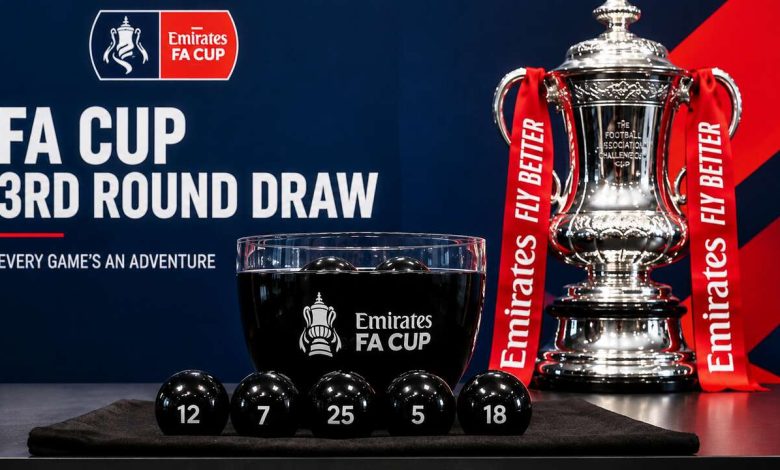
The FA Cup 3rd Round Draw is one of the most watched moments in the English football calendar. Whether you follow a Premier League giant or a non-league club that has battled through multiple qualifying rounds, the moment the balls come out of the pot carries a weight unlike anything else in domestic football. For a few seconds, any pairing is possible and that is precisely what makes it so special.
This guide covers everything from how the draw works and which teams are involved, to the history behind some of its most memorable moments and what the 2025-26 third round delivered.
What Is the FA Cup Third Round Draw?
The Emirates FA Cup is the oldest domestic cup competition in world football, and the third round is the stage that marks its transformation into a truly national event. Before this point, teams from the lower reaches of the football pyramid clubs from the National League system and the EFL’s lower two divisions have already been competing for several rounds. The third round is when the Premier League and EFL Championship clubs enter the competition for the first time.
This means 44 clubs from England’s top two divisions join the teams who have survived from the earlier rounds. Combined with the 20 second-round winners, the draw produces 32 ties in total, giving supporters the prospect of extraordinary matchups between clubs separated by several divisions.
The draw itself is typically held in December, usually coinciding with a live second-round fixture on TNT Sports. For the 2025-26 season, it took place on the evening of Monday 8 December 2025, conducted live from Brackley Town’s ground ahead of their second-round tie with Burton Albion. Former FA Cup winners Peter Crouch and Joe Cole pulled the balls, with 64 numbered balls representing 32 home and 32 away sides placed in the draw.
There is no seeding in the FA Cup 3rd Round Draw. Every remaining club goes into the same pot, which means a League Two side can be drawn at home to Manchester City just as easily as two Premier League clubs can be paired together. This complete lack of protection is what gives the draw its democratic quality and its reputation for producing genuinely unexpected fixtures.
How the FA Cup 3rd Round Draw Format Works
Once the draw is made, the 32 ties are played across a concentrated stretch of days in early January. For 2025-26, matches took place between 9 and 12 January 2026. Matches are typically spread across a Thursday to Monday window, with broadcasters on BBC and TNT Sports selecting games for live coverage.
A key rule change in recent seasons removed the option of replays from the third round onwards. If a match ends level after 90 minutes, the game goes straight to extra time and then, if needed, a penalty shootout to determine the winner. This change was made to reduce fixture congestion and protect player welfare, though it was met with some debate among supporters who valued the tradition of replays giving smaller clubs a second opportunity and a second payday at a Premier League ground.
On winning, each club receives £115,000 in prize money from the FA’s competition fund. Progression through subsequent rounds adds considerably more: £120,000 for the fourth round, £225,000 for the fifth, £450,000 for the quarter-finals, £1 million for the semi-finals, and £2 million for the winners of the final. A Premier League club entering at the third round and winning the trophy can accumulate up to £3.9 million in total prize money from the competition alone not counting gate receipts, which are split 45-45 between the two clubs after the FA takes a 10 per cent fee.
For lower-league sides, the financial boost from a single third-round tie can be genuinely transformative for their club’s season. Being drawn at home against a Premier League side can generate gate receipt income that dwarfs their typical matchday revenue, even when ticket prices are partially subsidised.
The 2025-26 FA Cup 3rd Round Draw in Full
The 2025-26 draw produced a strong set of ties with several standout fixtures that immediately captured attention.
Holders Crystal Palace were handed one of the toughest assignments on paper an away trip to non-league Macclesfield FC in what was widely described as a genuine test for the reigning champions. What followed wrote itself into the history books: Macclesfield produced a 2-1 victory over Palace, one of the most significant giant-killing results the competition has ever seen, with Paul Dawson leading the sixth-tier club to a landmark win.
Manchester United were drawn against Brighton and Hove Albion in an all-Premier League tie that proved equally dramatic, with Brighton winning 2-1 to send United out at the first hurdle. Tottenham Hotspur faced Aston Villa in another top-flight clash, while Arsenal made the trip to Fratton Park to take on Championship side Portsmouth. Chelsea were drawn away at Charlton Athletic in a London tie that took the Blues across the city.
Manchester City were paired with League One side Exeter City and responded with a dominant 10-1 win. Liverpool hosted Barnsley in the final game of the round, with the fourth-round draw taking place ahead of that match on 12 January.
Other fixtures produced their own talking points:
- Wrexham v Nottingham Forest brought together a resurgent lower-league club and a Premier League side in a tie of real intrigue
- Everton v Sunderland was one of several competitive-looking all-professional matchups
- Derby County v Leeds United offered the prospect of a tense Championship encounter
- Non-league sides including Weston-super-Mare and Boreham Wood were also in the draw, maintaining the competition’s tradition of including clubs from outside the professional pyramid
Why the FA Cup 3rd Round Draw Captures the Nation
There is a reason the FA Cup 3rd Round Draw has been a fixture in the English football calendar for decades. It represents something that few other events in sport can match the moment when complete unknowns and genuine underdogs learn whether they will get the chance to pit themselves against the richest and most powerful clubs in the country.
A non-league side that has won five or six qualifying round ties to reach the third round has already achieved something remarkable. But the draw is the moment when the dream either becomes a reality or requires another step. For a seventh-tier club to be drawn at home against a side with global recognition and a wage bill in the tens of millions that is the kind of pairing that sells out grounds and dominates local headlines for weeks.
The draw is also a significant commercial moment for clubs at every level. Reuterings and similar football-focused platforms reflect the sustained public appetite for FA Cup 3rd Round Draw coverage precisely because fixtures like these carry a cultural weight beyond the result itself.
A History of Third Round Shocks and Giant Killings
The FA Cup 3rd Round Draw has produced some of the most enduring stories in English football history, many of which are discussed and replayed decades after they occurred.
Hereford United’s 2-1 victory over Newcastle United in February 1972 remains the benchmark against which all subsequent giant killings are measured. Hereford were a Southern League side several levels below the professional pyramid and Newcastle were a top-flight club with genuine pedigree. Ronnie Radford’s long-range strike to level the match and Ricky George’s extra-time winner sparked a pitch invasion that has been replayed on television countless times since.
Sutton United’s 2-1 win over Coventry City in January 1989 took place just 18 months after Coventry had lifted the FA Cup themselves. Sutton were a non-league side managed by a schoolteacher, and goals from Tony Rains and Matthew Hanlan were enough to send the Sky Blues home in shock. Woking’s 4-2 win over West Bromwich Albion in 1991 was later calculated to have been a statistical probability of roughly one in 16 million which gives some sense of how significant an upset it represented.
More recently, the third round has continued to produce moments of genuine drama. Stevenage’s 3-1 win over Newcastle United, Cambridge United’s victory at St James’ Park, and Kidderminster Harriers’ defeat of Reading all added new chapters to the competition’s long record of upsets. The 2022-23 season saw several lower-league clubs knock out Premier League opposition, reinforcing the FA Cup’s reputation as the competition where league position and financial standing offer no guarantees.
The Macclesfield victory over Crystal Palace in January 2026 now sits alongside these results as one of the most striking upsets in the competition’s history. A sixth-tier club defeating the reigning holders away from home is exactly the kind of outcome that reminds everyone why the FA Cup 3rd Round Draw matters.
Which Teams Are Involved and When They Enter
Understanding the structure of the competition helps to appreciate what the third round draw actually means for each type of club involved.
Premier League and Championship clubs enter at the third round having had no involvement in the competition before this point. For these sides, the draw is their introduction to a competition that despite its prestige sometimes sits awkwardly in a congested fixture schedule. January is typically a demanding month in terms of league commitments, and the FA Cup represents an additional layer of preparation and travel.
EFL League One and League Two clubs enter at the first round in October or November and must win two ties before they appear in the third-round draw. Their presence at this stage represents genuine achievement and a financial reward that matters considerably more to their clubs than it would to a Premier League side.
Non-league clubs face the most demanding path of all. Qualifying rounds begin as early as August, meaning a seventh-tier side that reaches the third round proper has navigated five, six, or even seven ties before the Premier League clubs have kicked a single ball in the competition. The financial reward, the exposure, and the occasion of facing a professional opponent at a packed ground can sustain a club its fanbase, its commercial revenue, and its sense of identity for years.
How to Follow the FA Cup 3rd Round Draw
In the UK, the draw is broadcast live on TNT Sports and is also available to stream through the TNT Sports app and discovery+. The BBC typically shares broadcasting rights for selected matches, covering two games per round up to and including the quarter-finals, as well as one semi-final and the final itself.
The draw usually takes place on a Monday evening ahead of a live second-round tie, with the televised proceedings hosted by well-known presenters and former players making the draw. Former cup winners are typically involved in pulling the balls, which adds a sense of occasion to the event.
In the United States, FA Cup games including the draw coverage are available through ESPN and its network channels, including ESPN Select.
For supporters who cannot watch live, the full draw is published on the FA’s official website immediately after completion, with all 32 ties listed alongside their ball numbers and the scheduled dates for the matches.
What Happens After the Third Round
Teams who advance from the third round enter the fourth round draw, which typically takes place on the evening of the final third-round fixture. For 2025-26, that draw was held on 12 January, ahead of the Liverpool versus Barnsley match at Anfield, with Steven Gerrard and Joe Cole conducting the proceedings live on TNT Sports.
Fourth-round ties are played around the Valentine’s Day weekend in February, with the competition continuing through the fifth round, quarter-finals, and two semi-finals at Wembley before the final, which is also held at Wembley Stadium. There are no replays from the third round onwards, so every tie from this point is decided on the day.
The FA Cup final remains one of the most prestigious single-match occasions in English club football, drawing a worldwide television audience and carrying prize money of £2 million for the winning side.
For clubs with Wembley ambitions, it all begins with the third-round draw a few minutes in December when 64 numbered balls determine whether a non-league side faces Manchester City or a pair of Premier League clubs lock horns in a tie that neither wanted.
That combination of drama, unpredictability, and genuine emotional stakes is why the FA Cup 3rd round draw continues to hold its place as one of football’s most anticipated events every season.
Final Thoughts on theFA Cup 3rd Round Draw
The FA Cup 3rd Round Draw is far more than a scheduling exercise. It is the moment the competition truly comes alive when a club from the sixth tier of English football learns it will host a Premier League side, when supporters check the fixtures and start mentally mapping the route to Wembley, and when the romance that has defined this competition for over 150 years gets a fresh opportunity to write something new.
What the 2025-26 season delivered Macclesfield defeating holders Crystal Palace, Manchester United falling to Brighton, Arsenal travelling to Portsmouth was a reminder that no outcome in this competition is guaranteed. The draw does not care about wage bills, league positions, or recent form. It produces the fixture list, and from there, anything is possible.
For fans, analysts, and clubs at every level of the football pyramid, the third round draw remains the one moment in the season where hope and reality briefly exist in the same space. That is what makes it worth watching, worth talking about, and worth following all the way to the Wembley final.