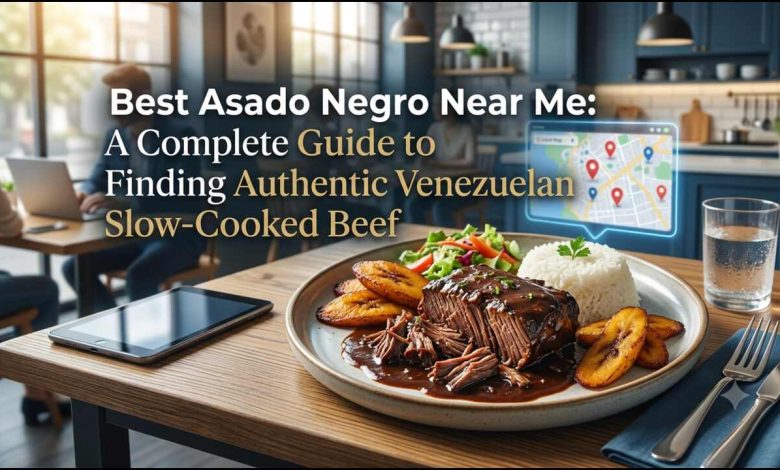
Best Asado Negro Near Me: A Complete Guide to Finding Authentic Venezuelan Slow-Cooked Beef
There are dishes in this world that go beyond nourishment. They carry memory, tradition, and a whole way of life in every bite. Asado negro is one of them. If you have recently found yourself searching for the best asado negro near me, you are reaching for something far greater than a simple meal you are looking for a connection to one of Latin America’s most celebrated culinary traditions. Rich, tender, deeply caramelized, and layered with flavour in ways that are difficult to fully describe until you experience them, asado negro is the kind of dish that earns devoted followers after just one taste.
Whether you are a longtime lover of Venezuelan food or someone who has heard the name for the first time and felt immediately curious, this guide covers everything you need to know from the origins and cultural significance of asado negro to the practical tips that help you identify a truly authentic version.
What Is Asado Negro? Understanding Venezuela’s National Comfort Dish
Asado negro translates literally from Spanish as “black roast,” and the name is a perfect description. The dish features a large cut of beef traditionally an eye of round, known in Venezuela as muchacho redondo that is slow-cooked for several hours in a deeply caramelized, glossy dark sauce. The signature colour comes not from charring or burning, but from the careful caramelization of papelón, Venezuela’s beloved unrefined cane sugar. When papelón melts and darkens in a hot pot, it coats the surface of the beef in a rich, mahogany crust that gives asado negro its dramatic appearance and its uniquely layered sweetness.
The sauce builds from there. Onions, garlic, bell peppers, herbs, bay leaves, red wine or Malta (a sweet malt drink popular in Venezuela), Worcestershire sauce, and beef broth all come together to create a braising liquid that transforms during slow cooking into something thick, glossy, and profoundly savoury. The beef absorbs these flavours over hours, becoming fork-tender without losing its shape. When it is sliced and served, each piece carries that dark crust alongside a melt-in-the-mouth interior that is unlike anything you will find in ordinary roast beef dishes.
People who search for the best asado negro near me are not looking for just any beef. They know, or sense, that this dish is something special and they are absolutely right.
The History and Cultural Roots of Asado Negro in Venezuela
Understanding where asado negro comes from adds a meaningful layer to every dining experience. The earliest documented recipe for this dish dates back to 1861 in Caracas, Venezuela’s capital city. From the very beginning, it was a celebration food prepared for birthdays, Christmas Eve dinners, holiday feasts, and those long, leisurely Sunday lunches where the whole family gathers around the table.
The roots of asado negro lie in the fusion of Spanish colonial cooking techniques and the resourceful traditions of Afro-Caribbean and indigenous Venezuelan cuisine. Spanish settlers brought slow-roasting methods and aromatic ingredients like garlic and bay leaves. Over generations, Venezuelan cooks made the dish their own, incorporating papelón an unrefined cane sugar deeply embedded in local food culture in a creative move that transformed a simple beef roast into something extraordinary.
Renowned Venezuelan chef and food historian Armando Scan none played a significant role in documenting and popularizing the dish, cementing asado negro’s place not just in home kitchens but in the country’s cultural identity. Today, every Venezuelan family has their own variation some use dark beer or Malta for depth, others prefer red wine, and some add a touch of soy sauce for extra umami. But the soul of the dish remains constant: patience, caramelization, and care.
What Separates Authentic Asado Negro from an Ordinary Beef Dish
This is where the search for the best asado negro near me really begins to matter. Many restaurants serve beef roasts. Far fewer serve genuine asado negro. The difference is not simply a matter of ingredients it is a matter of technique, time, and dedication.
Authentic asado negro is distinguished by several key qualities:
- The colour and texture of the sauce. A properly made asado negro sauce is glossy, rich, and deep brown almost black in places. It should coat a spoon lightly, carrying a syrupy quality that comes from long, slow reduction. If the sauce looks pale, thin, or watery, the dish has not been made correctly.
- The tenderness of the beef. The meat should be sliceable but not crumbling. It holds its form while being completely yielding to the fork. If the beef is chewy or tough, it has not been given enough time in the pot.
- The balance of flavours. Authentic asado negro strikes a very specific balance between sweet and savoury. The sweetness from the caramelised papelón is present but never dominant. It is supported by the acidity of wine, the savoriness of the braising liquid, and the warmth of aromatics. If any one note overpowers the others, the balance has been lost.
- The caramelization process. This is the heart of the dish. The beef must be seared directly in melted, darkened sugar not simply coated in a brown sauce as an afterthought. This step cannot be skipped or substituted.
- The time commitment. Genuine asado negro requires at least three to four hours of slow cooking, and the meat should ideally be marinated overnight beforehand. A restaurant that claims to serve authentic asado negro on demand, with no preparation time, is almost certainly cutting corners.
Key Ingredients That Define Genuine Venezuelan Asado Negro
When trying to identify whether a restaurant is serving the real thing, it helps to understand what goes into an authentic preparation. The ingredient list itself tells the story of the dish’s depth and complexity.
The beef cut matters enormously. The traditional choice is muchacho redondo an eye of round cut that is lean and firm enough to hold its shape during extended braising while still becoming beautifully tender. Some restaurants substitute other cuts, which can yield a different texture and flavor profile.
Papelón, or panela as it is called in other Latin American countries, is non-negotiable. This is Venezuela’s natural, unrefined cane sugar darker, earthier, and richer in flavor than ordinary white sugar. It retains the molasses from the cane juice, which gives the caramelized crust its depth. Some restaurants substitute refined sugar, which produces a thinner, less complex flavor.
The aromatics onions, garlic, cubanelle or bell peppers, and fresh herbs form the backbone of the braising sauce. Many recipes also include Worcestershire sauce, which contributes a savory, umami-rich quality. Wine, Malta, or both are commonly used as braising liquids, each adding their own character to the final sauce.
A sprinkle of cloves or a whisper of cinnamon occasionally makes its way into traditional recipes, adding warmth and complexity that lifts the entire dish.
The Art of Slow Cooking: Why Patience Is the Real Secret Ingredient
If there is one thing that genuinely separates a memorable asado negro from a disappointing one, it is time. This is a dish that cannot be rushed, and no kitchen shortcut can replicate what hours of gentle, steady cooking achieve.
The process begins the night before, with the beef marinating in a blend of garlic, Worcestershire sauce, wine, herbs, and seasonings. This overnight rest allows the flavors to penetrate deep into the meat before cooking even begins. The next day, papelón is melted in a heavy pot and darkened carefully reaching that precise moment between deep caramel and bitterness. The beef is laid into the bubbling sugar and seared, acquiring its signature dark crust. Aromatics and braising liquids follow, the heat is turned low, and the beef slowly transforms over three to four hours. Collagen breaks down, fibers relax, and the sauce reduces into something thick, glossy, and deeply layered in flavor.
Many cooks will tell you the dish tastes even better the next day, once the flavours have had more time to settle and deepen. For anyone searching for the best asado negro near me, this is the first filter: if a restaurant can offer it in minutes, it is not the real thing.
How to Find the Best Asado Negro Near You: Practical Steps That Work
The growing popularity of Venezuelan cuisine means more restaurants are featuring asado negro on their menus. But quality varies significantly, and knowing how to search smartly will save you both time and disappointment.
Seek out specialist Venezuelan restaurants first. The most reliable path to authentic asado negro is through restaurants that identify specifically as Venezuelan. Unlike Mexican, Colombian, or Peruvian establishments, which each have their own distinct culinary traditions, Venezuelan restaurants are more likely to have both the knowledge and the commitment needed to prepare asado negro correctly. Look for menus that feature other Venezuelan staples alongside it dishes like arepas, pabellón criollo, cachapas, tequeños, and hallacas. A kitchen that takes multiple Venezuelan dishes seriously is one that takes asado negro seriously too.
Call ahead and ask about availability. Because asado negro requires hours of preparation, many restaurants only serve it on weekends or as a rotating daily special. Calling ahead to confirm availability is not just practical it is also an opportunity to learn something about the restaurant’s approach. A place that answers questions about their preparation method with enthusiasm and detail is almost always a better bet than one that seems reluctant to discuss it.
Read reviews with specific attention. When browsing online reviews, look for mentions of the sauce’s richness, the tenderness of the meat, and the dish’s balance of flavours. Reviews from Venezuelan customers who recognise the dish from home are particularly telling. Words and phrases like “it reminded me of my grandmother’s cooking,” “the sauce was incredible,” or “this is the real thing” carry significant weight.
Look at customer photos. A genuine asado negro has a very recognizable appearance sliced beef in a dark, glossy, nearly black sauce, served alongside white rice, fried sweet plantains, or mashed potatoes. If the photos show a pale sauce or dry-looking meat, reconsider.
Consider family-run establishments. Some of the most authentic asado negro you will ever find comes from small, family-owned restaurants that rely on recipes passed down through generations. These places may not have elaborate décor or extensive marketing, but the food often speaks for itself. Word-of-mouth recommendations and neighbourhood reputation can be more reliable than star ratings in cases like these.
Explore social media and community groups. Venezuelan home cooks in many cities offer traditional dishes through local community groups or pop-up food events. These home-cooked versions of asado negro can be outstanding made with deep personal connection to the tradition and prepared just as it would be in a Venezuelan household.
What a Great Plate of Asado Negro Should Look and Taste Like
Knowing what to expect when the plate arrives helps you judge quality with confidence. The beef should be sliced not shredded with each piece carrying a visible dark crust from caramelization, giving way to a tender interior. The sauce should be spooned generously over the top: glossy, deeply coloured, and neither translucent nor muddy.
The first bite delivers a quiet layering of flavors sweetness first, then the deep savories of the braising liquid and aromatics, then a background warmth from spices. The beef yields easily, releasing absorbed juices as you chew. There should be no resistance, no stringiness, and no dryness. White rice absorbs the sauce and lightens the plate. Fried sweet plantains tajadas add a gentle sweetness that harmonizes rather than competes. Some restaurants round out the meal with mashed potatoes, black beans, or a simple salad.
A quality plate is always generous with the sauce. The sauce is the soul of asado negro the part that carries the most flavor, demands the most skill, and stays with you the longest.
Signs a Venezuelan Restaurant Is Worth Visiting for Asado Negro
As the team at Reuterings has noted through writing about Latin American cuisine, finding restaurants that honour traditional preparation is more than a matter of luck it is a matter of knowing what to look for before you walk through the door.
Some markers of quality are easy to spot:
- The restaurant has a menu that features several traditional Venezuelan dishes, not just one or two items marketed as “Latin American.”
- Staff members are knowledgeable about the food and can describe preparation methods when asked.
- The restaurant has been in operation for several years and has a consistent track record of positive reviews.
- The asado negro is listed with a preparation note, such as “slow-cooked” or “marinated overnight,” indicating the kitchen understands the process.
- The restaurant has Venezuelan ownership or a team with deep ties to the cuisine.
Conversely, some things warrant caution. A restaurant that lists asado negro alongside ten other cuisines, with no discernible specialisation, is less likely to prepare it with the care it deserves. Similarly, if the dish is priced significantly lower than expected, it may reflect shortcuts in preparation or ingredient quality.
Why Asado Negro Continues to Earn New Fans Around the World
Venezuelan cuisine has grown steadily in global recognition, and asado negro has played a meaningful role in that rise. For food lovers drawn to exploring beyond familiar beef dishes, asado negro offers something genuinely distinctive: a flavour profile that is sweet and savoury simultaneously, a texture that is deeply satisfying without being heavy, and a presentation that is visually striking.
The dish also carries emotional resonance that extends beyond taste. For the Venezuelan diaspora living outside their home country, a well-made plate of asado negro is a connection to family tables, holiday celebrations, and the warmth of a meal made with care. For newcomers to Venezuelan cuisine, it is often the dish that converts casual curiosity into lasting devotion. When people search for the best asado negro near me, they are joining a growing global appreciation for something that has been perfected over more than a century in Venezuelan kitchens.
Final Thoughts: Making the Most of Your Search
Finding the best asado negro near you is equal parts research and instinct. Start with restaurants that specialise in Venezuelan cuisine. Ask questions, read reviews carefully, call ahead to check availability, and pay close attention to photographs. When the plate arrives, take a moment to appreciate what you are about to eat a dish rooted in colonial history, shaped by generations of home cooks, and refined through decades of celebration and family gathering.
This is not fast food. When you find a version that gets it right when the sauce is glossy and deep, the beef yields at the first touch of a fork, and the flavours settle into that perfect balance between sweet and savoury you will understand exactly why so many people keep searching. Asado negro, at its best, is one of those rare dishes that leaves a lasting impression and brings you straight back for more.