Huaraches Food: The Ultimate Guide to Mexico’s Sandal-Shaped Street Food Sensation
Introduction
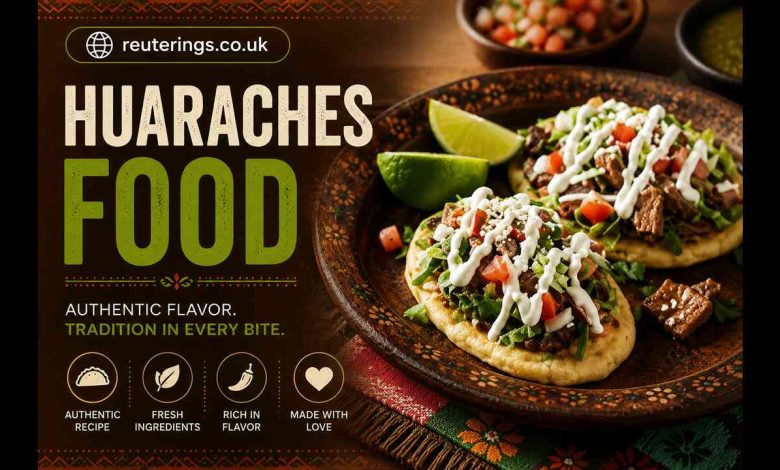
If you’ve spent any time scrolling through food videos or wandering the stalls of a Mexican market, you’ve probably stumbled across huaraches food and wondered exactly what you were looking at. Is it a taco? A tostada? Some kind of Mexican flatbread? In truth, huaraches are their own glorious thing entirely a thick, oblong masa base, crisped on a griddle, piled high with beans, meat, cheese, salsa and whatever else the cook fancies throwing on top.
For readers across the UK and the US, huaraches represent something the food scene has been craving for a while: a dish that’s hearty, endlessly customizable, and rooted in genuine culinary history rather than a trend cooked up for social media. As Mexican cuisine continues to grow in popularity from London to Los Angeles, huaraches are quietly becoming the next big thing to land on menus, in food trucks, and in home kitchens. This guide breaks down everything you need to know what huaraches actually are, where they came from, how to make them, and where to find the best versions on both sides of the Atlantic.
What Is Huaraches Food? Origins and Meaning
The word “huarache” literally means “sandal” in Spanish, and it refers to the traditional woven leather sandals worn throughout Mexico for centuries. The dish borrows the name because of its shape: a long, flattened oval of corn masa that genuinely resembles the sole of a shoe.
- Origin story: Huaraches are widely believed to have originated in the early twentieth century in the Jamaica and La Viga neighborhoods of Mexico City, where street vendors began shaping masa into long ovals, stuffing them with beans, frying them on a comal (a flat griddle), and topping them with meat and salsa.
- Popular attribution: Many food writers credit a vendor named Carmen Gómez Medina with popularizing the dish in the 1930s, as she experimented with new recipes to draw in more customers at her stall.
- From street snack to city staple: What started as a humble, filling snack for market workers has since spread across Mexico City and beyond, becoming a fixture at fondas, food stalls, and now restaurants around the world.
- Not to be confused with the shoe: Despite sharing a name with footwear, the dish and the sandal are entirely separate things the naming is purely about shape, not ingredients.
Huaraches belong to a broader family of Mexican street foods known as antojitos (literally “little cravings”), which also includes sopes, tlacoyos, and garnachas. What sets huaraches apart is their size and structure they’re typically large enough to serve as a full meal rather than a snack, often stretching to the length of an adult shoe.
What Goes Into a Huarache? Ingredients and Regional Variations
At its core, a huarache starts with a base of masa (corn dough made from nixtamalized corn or masa harina), which is shaped into an oval, often with a layer of refried beans worked into the dough itself before it’s cooked. From there, the toppings are where the dish really comes alive.
Classic huarache components include:
- Masa dough base, griddled or lightly fried until crisp outside and soft inside
- Refried pinto or black beans, either mixed into the dough or spread on top
- A protein such as steak (bistec), chorizo, carnitas, tongue (lengua), or shredded chicken
- Nopales (cactus paddles), often grilled or sautéed
- Green or red salsa
- Crumbled queso fresco or grated cheese
- Diced onion, chopped cilantro, and shredded lettuce or cabbage
- A dollop of crema or a drizzle of lard for richness
Because Mexico’s culinary regions each put their own spin on things, you’ll find plenty of variety depending on where the huarache was made:
- Sonoran-style huaraches: Topped with crispy pork cracklings (chicharrón) and beef tongue birria, finished with a red salsa made from tomatoes, onion, and árbol chiles.
- Campechano huaraches: A combination of steak and longaniza sausage, cooked together and topped with both red and green salsa.
- Vegetarian huaraches: Built around nopales, mushrooms, or roasted vegetables instead of meat, making them a great option for plant-based eaters.
- Huaraches with chicken milanese: Breaded chicken served alongside a tomato or tomatillo sauce, sometimes flavoured with epazote.
If you enjoy this level of detail on regional Mexican dishes, you may also want to check out related pieces on our site covering other Latin American street foods and travel guides to Mexico for anyone planning a trip inspired by their newfound love of huaraches food.
How to Make Huaraches at Home: Tips and Practical Advice
You don’t need a trip to Mexico City to enjoy an authentic huarache with a few simple ingredients, you can recreate this dish in a UK or US kitchen. Here’s a practical breakdown to get you started.
Basic method:
- Make the masa dough. Combine masa harina with water and a pinch of salt, kneading until it holds together without cracking or sticking to your hands. If it cracks at the edges, it’s too dry; if it clings to your skin, add a touch more masa harina.
- Shape the base. Take a portion of dough about the size of a large apple, flatten it into an oval roughly 6–8 inches long, and press your thumb down the centre to help it cook evenly. Some cooks stuff a spoonful of refried beans into the middle before sealing and reshaping.
- Cook it low and slow. Griddle the huarache on a hot comal or heavy skillet for around 3 minutes per side, until it develops a crisp, slightly charred exterior while staying soft in the middle.
- Build your toppings. Spread on refried beans (if you haven’t already stuffed them in), then layer your protein, salsa, cheese, onion, and herbs.
- Serve immediately. Huaraches are best eaten fresh off the griddle while the base is still warm and slightly crunchy at the edges.
Practical tips for best results:
- Masa harina is available at most large supermarkets in the UK and US, as well as specialist Latin American grocers look for brands like Maseca.
- If you don’t have a comal, a well-seasoned cast iron skillet works just as well.
- For a lighter, healthier version, skip the lard and dry-griddle the base instead of frying it beans provide fibre and plant protein, while corn masa contributes complex carbohydrates.
- Leftover masa dough can be frozen and used later, making huaraches a great make-ahead option for meal prep.
- Pair huaraches with a simple side of pickled jalapeños or a squeeze of lime to cut through the richness.
Whether you’re cooking for a family dinner or hosting a Mexican-themed evening for friends, huaraches are forgiving, customisable, and genuinely impressive to serve.
Where to Find Huaraches Food in the UK and US
While huaraches food hasn’t quite reached the mainstream recognition of tacos or burritos in Britain and America, that’s changing fast as more authentic Mexican restaurants and street food traders expand beyond the big cities.
- In the US, look to cities with strong Mexican culinary traditions Los Angeles, Chicago, Houston, and San Antonio all have taquerias and market stalls serving proper huaraches, often labelled simply as “huarache” on the menu alongside tacos and tortas.
- In the UK, London’s street food markets (such as those in Shoreditch, Camden, and Borough Market) increasingly feature Mexican vendors experimenting with regional dishes beyond the standard taco, and huaraches are becoming a fixture at food festivals.
- When searching, look for restaurants run by Mexican chefs or families rather than generic “Tex-Mex” chains, as huaraches are less commonly found outside of dedicated Mexican kitchens.
If you can’t find them locally, that’s all the more reason to try making your own at home using the method above.
Conclusion: Huaraches Food
Huaraches food is one of Mexico’s most satisfying culinary exports a dish with real history, built from humble ingredients, and endlessly adaptable to whatever toppings you have on hand. From its beginnings as a street vendor’s clever creation in early twentieth-century Mexico City to its growing presence on menus across the UK and US, the sandal-shaped masa base has earned its place among the great street foods of the world.
Whether you’re planning to seek one out at your nearest Mexican restaurant or roll up your sleeves and make your own at home, huaraches offer something genuinely different from the usual taco night. Have you tried huaraches before, or are you inspired to make your first batch this weekend? Let us know in the comments, and don’t forget to explore more authentic food guides and travel inspiration right here on Reuterings.
Read-interesting-Information-About-Blogs-Entertainment-At: reuterings.co.uk