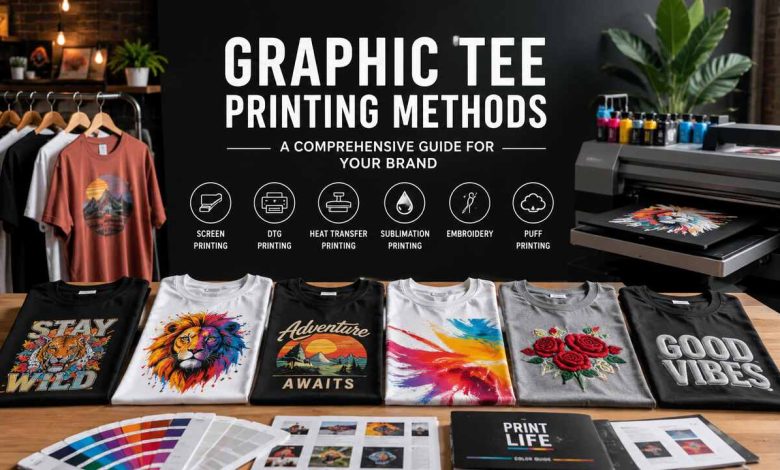
Graphic Tee Printing Methods: Which One Actually Makes Your Design Last?
You finally found the perfect graphic. The colours are right. The message feels personal. But six months later, the print is cracking, fading, or peeling at the edges and the shirt you loved is already headed toward the back of your wardrobe.
This is not just bad luck. It is almost always the result of choosing the wrong printing method for the design, the fabric, or the intended use. Understanding how different printing techniques work and where each one excels is the difference between a graphic tee that lasts years and one that disappoints after a handful of washes.
This guide breaks down every major graphic tee printing methods available today, what makes each one worth considering, and how to match the right technique to your specific needs.
Why Printing Method Matters More Than Most People Realise
Most people focus on the design. Fewer think carefully about how that design gets onto the shirt. But the printing method determines almost everything about the long-term quality of a graphic tee: how vivid the colours stay, whether the print cracks or peels with age, how the finished design feels against the fabric, and how many washes the tee can survive before showing signs of wear.
Two shirts with identical designs can age completely differently depending on whether one was screen printed and the other was produced with a cheaper heat transfer method. The fabric matters. The inks matter. But so does the process used to bring the design to life.
Screen Printing: The Gold Standard for Bold, Lasting Graphics
Screen printing has been the dominant method for producing graphic tee printing methods for decades and for good reason. The process involves pushing specially formulated inks through a fine mesh screen directly onto the fabric surface. Each colour in the design requires its own separate screen, and the layers of ink build up to create a vivid, tactile print that sits confidently on the shirt.
What Makes Screen Printing Stand Out
The defining quality of a well-executed screen print is its durability. Because the inks are applied in substantial, even layers and then cured with heat, they bond strongly to the fabric fibres. A properly screen printed graphic tee can withstand hundreds of washes without significant colour loss or cracking, provided basic care instructions are followed.
Screen printing also produces colours with exceptional saturation and depth. Colours appear bright and consistent across an entire production run, which makes this method ideal for brands, merchandise, and any situation where colour accuracy across multiple units matters.
Where Screen Printing Works Best
Screen printing performs at its highest level on designs with a defined, limited colour palette typically up to six or seven colours. Clean shapes, bold typography, and strong graphic forms translate beautifully through this process. It is the natural choice for band merchandise, branded tees, sports team apparel, and any design that prioritizes visual impact and longevity over photographic detail.
The method works best on medium to heavyweight cotton and cotton-rich fabrics. Combed and ring-spun cotton provides the smooth, stable surface that allows screen print inks to settle evenly and cure correctly.
The Limitations of Screen Printing
Screen printing becomes less practical for designs featuring gradients, photorealistic imagery, or a large number of distinct colours. Each additional colour requires a new screen and additional passes through the press, which increases both production time and cost. For short runs or highly detailed, multicolor artwork, other methods may offer a more practical or cost-effective route.
Direct-to-Garment (DTG) Printing: Precision for Complex Designs
Direct-to-garment printing works similarly to a standard inkjet printer, except the garment itself replaces the paper. A specialized machine applies water-based inks directly onto the fabric surface, working from a digital file to reproduce the design with fine precision.
Graphic tee printing methods
When most people shop for a graphic tee, they focus entirely on the design — the artwork, the colours, the message. What rarely gets considered is how that design actually gets onto the shirt. Yet the printing method used is one of the most important factors in determining how a graphic tee looks, feels, and holds up over time. Two shirts carrying the exact same design can age in completely different ways depending on whether one was screen printed, digitally printed, or produced through a heat transfer process. Some methods build ink layers on top of the fabric surface, while others bond colour directly into the fibres themselves. Some excel at bold, flat graphics with strong colour saturation, while others are purpose-built for photorealistic imagery and complex multicolour artwork. The right method depends on the design itself, the fabric of the garment, the number of units being produced, and how the finished tee will be worn and cared for. Understanding these differences does not require technical expertise — it simply requires knowing what to look for and what questions to ask. This guide covers every major Graphic tee printing methods available today, breaking down how each one works, where it performs best, and what its limitations are.
Fabric Compatibility
DTG printing performs best on fabrics with a high cotton content ideally 100% ring-spun or combed cotton. The natural fibres in cotton absorb the water-based inks well, allowing for accurate colour reproduction and strong adhesion. Polyester-heavy blends are more challenging for DTG; the synthetic fibres do not absorb ink in the same way, which can result in less vibrant colours and reduced durability.
White and light coloured garments produce the most accurate DTG results. Printing on darker fabrics requires a white under base layer to be applied first, which adds a step to the process and can slightly affect the softness of the finished print.
Where DTG Falls Short
While DTG offers impressive design flexibility, it is generally less durable than screen printing over the very long term. Proper care particularly washing inside out in cool water extends the life of a DTG print considerably, but prints may begin to show some fading after extensive washing more quickly than a well-executed screen print. DTG is also slower and more expensive per unit at high volumes, which is why it tends to be favoured for custom and small-batch production rather than large commercial runs.
Direct-to-Film (DTF) Printing: Versatile, Vibrant, and Growing Fast
Direct-to-film printing is one of the newer techniques to gain widespread adoption in the graphic tee printing methods industry, and its growth in popularity reflects some genuine advantages over older methods. The process works in two stages: first, the design is printed onto a specialized transfer film using a DTF printer, then a powdered adhesive is applied and cured, and finally the finished transfer is heat-pressed onto the garment.
Why DTF Has Gained So Much Ground
The most compelling advantage of DTF printing is its versatility. Unlike DTG, which is heavily dependent on cotton-rich fabrics for optimal results, DTF transfers can be applied to virtually any fabric type cotton, polyester, nylon, denim, and blended materials all work well. This makes DTF a practical solution for brands or designers working across a range of garment types.
DTF also handles complex, multicolor designs with strong results. The print quality is crisp and detailed, colours are vibrant, and fine edge details are reproduced cleanly. The finished print has a smooth, flexible feel and holds its shape well through repeated washing, making it a reliable choice for everyday wearable graphics.
The economics of DTF are also attractive for medium-sized production runs. Without the screen setup costs associated with traditional screen printing, DTF is accessible for runs that would be too large to make DTG cost-effective but too small to justify full screen printing setup.
Considerations with DTF
Some DTF prints have a slightly raised, film-like texture compared to screen prints or DTG, which some wearers notice on softer, lighter-weight fabrics. The quality of the adhesive powder and the precision of the heat-press process both play a significant role in how well the print adheres and how naturally it wears. When executed well by an experienced printer, DTF produces results that are difficult to distinguish from more established methods.
Dye Sublimation: Built Into the Fabric Itself
Dye sublimation takes a fundamentally different approach to printing. Rather than applying ink to the surface of a fabric, the sublimation process converts specially formulated dyes into a gas state using heat and pressure. In this gaseous form, the dye penetrates directly into the polyester fibres of the fabric and bonds with them at a molecular level. Once cooled, the dye becomes a permanent part of the fabric rather than a layer sitting on top of it.
The Unique Advantages of Sublimation
Because sublimated prints are bonded into the fabric rather than applied onto it, they are exceptionally resistant to the wear and tear that other printing methods face over time. There is no ink layer to crack, peel, or fade in the way that surface prints can. A sublimated graphic tee, cared for properly, retains its colour and clarity through years of washing and regular use.
Sublimation is the only method that allows for seamless all-over printing across the entire garment including seams, which other methods cannot bridge. This makes it ideal for bold, full-coverage designs, athletic apparel, and pieces where the print is as much a part of the garment’s construction as the fabric itself.
The colour depth achievable through sublimation is impressive, and the process handles photographic imagery and complex colour gradients with ease.
The Key Limitation: Fabric Requirement
Dye sublimation works exclusively on polyester or polyester-coated fabrics. The dye bonds with synthetic fibers; on natural fibers like cotton, the process does not work effectively. This limits sublimation to specific garment types and rules it out for those who priorities the feel and breathability of natural fabrics.
For polyester or performance-fabric tees, however, sublimation is arguably the most durable and visually striking printing option available.
Graphic tee printing methods: Accessible but Limited in Longevity
Heat transfer printing involves printing a design onto a specialized transfer sheet or vinyl, which is then pressed onto the garment using a heat press machine. It is one of the most accessible and widely available methods, often used for personalized and custom single-item orders.
When Heat Transfer Makes Sense
For simple, personalized designs names, numbers, basic text, or small logos heat transfer offers a quick and accessible solution. It requires minimal equipment setup and can be produced in small quantities at relatively low cost.
The Durability Trade-Off
The primary drawback of standard heat transfer printing is longevity. The print sits as a layer on top of the fabric rather than bonding with it at depth, which means it is more susceptible to cracking, peeling, and fading with repeated washing. Higher-quality heat transfer films and careful application can extend the life of the print, but it generally does not match the durability of screen printing, DTG, or DTF over the long term.
Heat transfer is best understood as a practical option for low-volume or one-off personalization rather than as a production method for graphic tees intended for extended everyday wear.
How to Choose the Right Printing Method
Matching the right printing method to your graphic tee printing methods project comes down to four questions.
What does the design look like: Bold graphics with a limited colour palette are a natural fit for screen printing. Photorealistic or highly detailed multicolor artwork works better with DTG or DTF. All-over coverage designs belong in the sublimation category.
What fabric is the tee made from: High-cotton fabrics open up all methods effectively. Polyester-heavy or synthetic fabrics narrow the choice toward DTF or sublimation. Mixed-material garments are best served by DTF for its broad compatibility.
How many units are needed: Small custom orders favor DTG or DTF for their low setup requirements. Larger production runs benefit from the cost efficiency of screen printing. Sublimation scales well across run sizes when the fabric requirement is met.
How will the tee be worn and washed: If long-term durability through regular washing is a priority, screen printing and sublimation lead the field. For occasional wear or display, the durability differences between methods matter less.
Final Thoughts
The printing method used to produce a graphic tee is not a background technical detail it is a fundamental part of what the finished garment is and how long it lasts. A great design deserves to be produced with a method that does it justice, applied to a fabric that supports it, and cared for in a way that preserves it.
Understanding the strengths and limitations of each technique puts you in a far stronger position whether you are choosing a graphic tee printing methods to wear, commissioning custom designs, or building a product range. The right combination of design, fabric, and printing method is what transforms a printed shirt from a short-lived novelty into a wardrobe staple that genuinely earns its place.