
Janitor AI Explained: The Complete Guide to the Chatbot Everyone’s Talking About
Introduction
There’s a particular kind of discovery that happens in online communities someone shares a tool, a thread explodes, and suddenly everybody’s talking about it. That’s roughly how Janitor AI entered the conversation for a lot of people. Forums, Reddit threads, Discord servers the name kept coming up, usually alongside enthusiastic first impressions and a fair few questions from newcomers trying to figure out what exactly it is.
So let’s clear that up from the start.
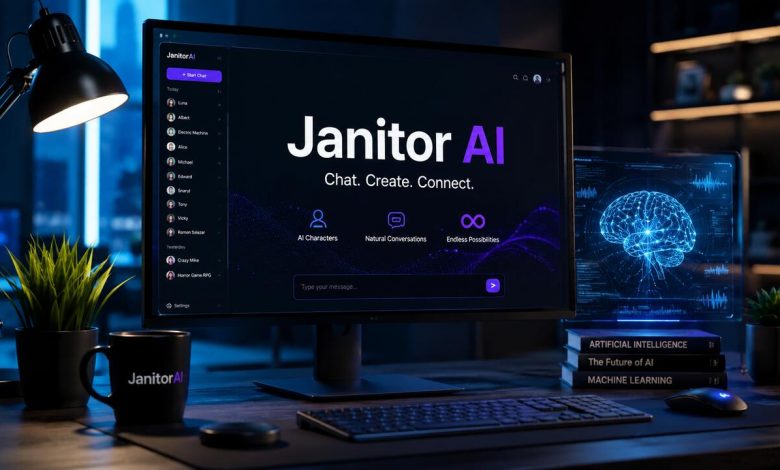
Janitor AI is a character-based chatbot platform that lets users create, customize, and chat with a wide range of fictional personas. Some of those personas are serious. Some are whimsical. Some are designed for deep narrative roleplay. The platform has attracted millions of users, particularly those drawn to interactive storytelling, creative writing, and personalized character experiences. It sits in a growing niche of platforms that priorities character over task completion which puts it in an entirely different category from your average customer service bot.
This guide walks you through what Janitor AI actually is, how the Janitor AI chatbot works in practice, what makes it worth your time, and what you should know before diving in.
What Is Janitor AI?
At its core, Janitor AI is a platform for conversational character interaction. Users can browse an enormous library of pre-built characters some based on popular media, others entirely original and hold extended, context-aware conversations with them. The characters have defined personalities, backstories, and communication styles that persist throughout the conversation.
What separates it from a simple novelty is the depth of the character system. A well-built character on Janitor AI doesn’t just respond to surface-level prompts. It maintains tone, references its own history, and responds in ways that feel consistent with its established persona. For writers, this makes it an unusually useful brainstorming partner. For fans of particular fictional universes, it offers a way to interact with characters they’re already invested in.
The platform also allows users to create their own characters from scratch. This is where things get genuinely interesting. You can define a character’s personality traits, speaking style, knowledge base, physical description, and scenario context. The result is a chatbot persona tailored entirely to what you want from the experience.
How Janitor AI Works
Understanding the Janitor AI chatbot means understanding a few moving parts.
The Character Card System
Every character on Janitor AI is built around what the platform calls a “character card.” This is essentially a structured profile that defines who the character is their name, personality description, sample dialogue, a scenario setting, and a first message that kicks off conversations. Think of it as a character brief. The more detailed and considered the card, the more coherent and engaging the resulting conversation tends to be.
Character cards are created by users and published to the platform, where they can be discovered, rated, and used by others. There’s a collaborative quality to this creators building characters that the wider community then interacts with.
API Integration
One of the features that distinguishes Janitor AI from closed platforms is its support for third-party API connections. Users can connect their own API keys, which lets them tap into different underlying models and adjust parameters like response length and creativity levels. This appeals to more technically inclined users who want greater control over the experience. For casual users, the default setup works perfectly well without any additional configuration.
The Conversation Flow
Once you load a character and start a conversation, Janitor AI draws on the character card to shape every response. The context from earlier in the conversation is carried forward, so the character “remembers” what’s been discussed. Long-term roleplay scenarios work well because of this characters don’t reset between exchanges, which makes sustained narratives feel more coherent.
Users can also set a custom scenario at the start of a conversation, giving additional context that shapes how the character responds. If you want a particular character to respond as though they’re meeting you for the first time in a specific setting, you can frame it that way.
Key Janitor AI Features Worth Knowing
A Janitor AI guide that doesn’t cover the actual feature set isn’t much use to anyone, so here’s a practical breakdown.
Extensive Character Library
At any given time, Janitor AI hosts tens of thousands of characters. These range from original creations to personas inspired by anime, video games, novels, films, and internet culture. The search and filter functionality lets you narrow down by tags, popularity, or content type. If you’re looking for something specific, chances are it exists. If it doesn’t, you can build it.
Character Creation Tools
The creation interface is one of Janitor AI’s strongest points. It’s not especially complex to learn, but it offers enough customization to produce genuinely distinctive characters. You can write out a detailed personality description, add example conversations to train the character’s tone, set a scenario, and choose whether the character is public (visible to all users) or private (for your personal use only).
Getting good results from character creation is as much about the quality of your writing as it is about the tools themselves. Vague personality descriptions produce vague characters. Specific, vivid character writing produces conversations that feel much more alive.
Content Filters and Settings
Janitor AI has content settings that allow users to toggle between filtered and unfiltered conversation modes. The platform has a distinct adult content tier, which requires age verification, separate from its general content. This is worth mentioning plainly because it’s part of why the platform has attracted a particular segment of users but the general, non-adult side of the platform is equally functional for users who have no interest in that content.
Persona Customization for Users
Beyond the characters themselves, you can also customize your own user persona how you present yourself within conversations. This affects how characters respond to you and allows you to maintain a consistent identity across different roleplay scenarios. It’s a small feature, but it adds a layer of consistency that regular users tend to appreciate.
Who Actually Uses Janitor AI?
The user base is more varied than first impressions might suggest. Yes, there’s a significant overlap with anime communities and fan fiction circles that’s evident from a quick browse of the character library. But the platform is also used heavily by:
Creative writers: Who use character conversations to develop fictional voices, test dialogue, and explore how a character they’re building might respond in different situations. It’s essentially an interactive writing exercise.
Worldbuilders and game designers: Who want to stress-test NPCs or develop backstories through conversation rather than just prose notes.
Fans of interactive fiction: Who grew up with text adventures and visual novels and appreciate the open-ended nature of character-driven chat.
People working through social scenarios: Some users find character-based conversation useful for practising communication in low-stakes environments, particularly for social anxiety or language learning.
That last one might surprise people who assume the platform is purely entertainment. But tools that reduce friction around communication practice tend to find unexpected audiences.
Practical Tips for Getting the Most Out of Janitor AI
Whether you’re new to the platform or have been using it for a while, a few things consistently make the experience better.
Be specific when creating characters: The single biggest quality indicator in character creation is specificity. “A mysterious wizard” produces mediocre results. “An ageing court wizard who spent forty years in service to a king he secretly despised, speaks in formal but clipped sentences, and has a habit of deflecting personal questions with historical anecdotes” produces something far more interesting.
Use the example dialogue section properly: This section is often underused. Adding three or four back-and-forth exchanges that demonstrate exactly how you want the character to communicate does more for consistency than almost anything else in the character card.
Set a clear scenario: The opening scenario text is your opportunity to establish context before the conversation begins. Use it to define the setting, any relevant history between your persona and the character, and the emotional register of the scene. The more clearly you establish the world, the better the conversation tends to go.
Don’t overcorrect responses: When a conversation starts drifting away from the character’s established personality, the temptation is to heavily redirect it. Often, a light nudge works better a brief note in brackets or a rephrase of the previous exchange. Heavy-handed corrections can disrupt the flow more than they fix it.
Explore the community-built characters before building your own: If you’re new to the platform, spend time with existing characters first. It gives you a clear sense of what works, what doesn’t, and what the platform’s strengths actually are before you invest time in creation.
Janitor AI vs. Other Character Platforms
The character chatbot space has grown significantly over the past few years, and Janitor AI isn’t alone in it. Platforms like Character AI and others occupy overlapping territory so it’s worth knowing where Janitor AI distinguishes itself.
The API flexibility is one clear differentiator. The ability to connect your own keys and customize the underlying parameters gives technically literate users significantly more control than most competing platforms offer.
The community-driven character library is another. The sheer volume of community-created characters, combined with a rating and tagging system that helps surface quality, means the platform improves as more users contribute. It has a wiki-like quality the more people participate in good faith, the better it gets.
Where Janitor AI is less polished is in its interface design. It’s functional but not beautiful, and new users sometimes find the onboarding process less guided than they’d like. The learning curve isn’t steep, but it exists.
Is Janitor AI Free?
Janitor AI operates on a freemium model. The basic platform is free to access, and you can have full conversations with characters using the default settings without paying anything. However, certain features including some API-related options and premium character access sit behind a paid tier.
For most casual users, the free tier is genuinely adequate. The limitations become relevant mainly for users who want to use their own API connections at high volume or who want to access certain content categories that are gated.
FAQs About Janitor AI
1. Is Janitor AI safe to use: For adult users, yes with standard caveats about any online platform. Content filters exist and can be configured. Parents should be aware that adult content tiers exist on the platform; it’s not designed as a service for minors, and age verification is part of accessing mature content.
2. Can I use Janitor AI without creating an account: Limited browsing is possible without signing in, but full access to conversations and character creation requires a free account.
3. How do I connect my own API key to Janitor AI: Within the settings menu, there’s an API configuration section where you can enter your key and select your preferred settings. The platform supports multiple API options, and the documentation in the settings area walks you through the process clearly enough for non-technical users.
4. Can I make my characters private: Yes. When creating a character, you have the option to set it as private, meaning only you can access it. This is useful for characters you’ve built for personal use or work-in-progress personas you don’t want to publish.
5. Are the conversations saved: Conversation history is stored on the platform for registered users. You can return to previous chats, though very long conversations may experience some context limitations within a single session.
Conclusion: What Janitor AI Is Really Good For
Strip away the more colorful aspects of its reputation and Janitor AI is, at its core, a well-built tool for character-based conversation. Whether you’re using it for creative development, interactive entertainment, fan community engagement, or just out of curiosity, the platform delivers on its core promise: persistent, character-consistent conversations with a vast range of personas.
It’s not perfect. The interface could be more polished. New users could use a cleaner onboarding path. And the sheer variety of content means quality varies considerably across the character library.
But the underlying system the character card approach, the API flexibility, the community-built library is genuinely solid. People keep coming back to it because it works.