
Barbara Roufs: The Story Behind the 1970s Drag Racing Queen
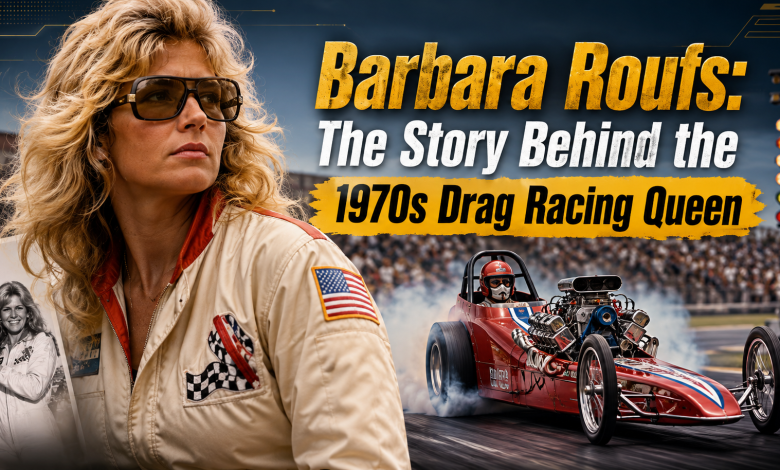
If you have spent any time scrolling through old drag racing photos, chances are you have come across a woman with long brown hair, a bright smile, and a pair of go-go boots standing in the winner’s circle. That woman is Barbara Roufs. She was one of the most recognized trophy girls of the 1970s, and decades later, people are still searching for her story.
This post looks at who Barbara Roufs really was, how she became a fixture of Southern California drag racing culture, and why her image still shows up on fan pages and racing forums today.
Who Was Barbara Roufs?
Barbara Roufs was an American trophy girl who became one of the most familiar faces at Southern California drag strips during the late 1960s and early 1970s. She was born Barbara Jean Riley in 1943 and grew up in California, where cars and racing were simply part of daily life.
She was not a driver or a mechanic. Her role was to greet winning racers in the winner’s circle, hand over trophies, and pose for photographs that captured the excitement of race day. It sounds like a small job on paper, but Barbara Roufs turned it into something people remember more than fifty years later.
Early Life and Family Background
Barbara’s father, Wayne Eldon Riley, loved motorcycles and took part in local races at Kearney Bowl. His passion for speed rubbed off on his daughter early. Her mother, Thelma Ruby Riley, ran a beauty salon in Clovis, California, and also played the organ at her church, so Barbara grew up watching two very different sides of hard work and community life.
She married Donald Arthur Roufs in 1961, and the couple had a daughter named Bridgette in 1964. Donald and Barbara later divorced in 1971, around the same time her career as a trophy girl was picking up real momentum.
Growing Up Around Motorsports
Barbara’s connection to racing was not something she stumbled into by accident. She grew up around engines, race tracks, and the culture that came with them. That background gave her an easy, natural comfort at the raceway that fans and drivers picked up on right away.
By the time she started appearing at events, she already understood the rhythm of race day better than most newcomers ever could.
Barbara Roufs and the Rise of the Trophy Girl Era
To understand why Barbara Roufs stood out, it helps to know a little about the trophy girl role itself. Trophy girls were a regular part of drag racing events, appearing trackside to present awards and add a bit of glamour to the day.
Before the late 1960s, trophy girls often wore long dresses, gloves, and formal hats. That began to change as the decade turned, and Barbara Roufs was right in the middle of that shift.
Orange County International Raceway and the US Professional Dragster Championship
Barbara Roufs became especially well known through her appearances at Orange County International Raceway, one of the most important drag strips in California during that era. She was named queen of the 6th annual U.S. Professional Dragster Championship, a title that placed her firmly at the center of the sport’s biggest events.
Being chosen for that role was not a small thing. It meant she was recognized by racers, promoters, and fans as someone who represented the spirit of the championship itself.
The Professional Dragster Association (PDA)
Barbara also took part in the Professional Dragster Association in 1973, further cementing her presence across the major drag racing circuits of the time. Her name kept showing up alongside the biggest races in the region, and her face became one that regular attendees looked forward to seeing.
Photographers, including Tom West, captured many of these moments, and those photographs are a big reason her image has stayed alive on social media and racing history pages today.
The Signature Barbara Roufs Style
Part of what made Barbara Roufs so memorable was her look. She stood around 5 feet 5 inches tall, with brown eyes and long brown hair that became something of a trademark at the track.
Fashion That Defined a Decade
Her outfits, short shorts, go-go boots, and bright colors, matched the bold, free spirit of the 1970s. This was a clear break from the older, more formal trophy girl style, and it helped shape how people pictured drag racing glamour going forward.
Fans were drawn to that look, but they stayed for her personality. People who attended races during that time often describe her as warm, approachable, and genuinely interested in talking with drivers and fans alike.
More Than a Pretty Face
It would be easy to reduce Barbara Roufs to just her appearance, but that misses the bigger picture. She helped change how women were viewed within motorsports, showing that a trophy girl could carry herself with confidence and professionalism while still being warm and down to earth.
Her manner at the track set a tone that others who followed in similar roles would go on to copy. In many ways, she helped write the playbook for what a modern trophy girl could be.
Barbara Roufs’ Personal Life
While her public image was bright and outgoing, Barbara Roufs kept much of her personal life away from the cameras.
Marriage to Donald Roufs
Her marriage to Donald Arthur Roufs began in 1961 and produced her daughter, Bridgette, in 1964. The couple divorced in 1971, right around the time her racing appearances were becoming more frequent and more prominent.
She kept the Roufs name throughout her career, and it is the name most fans and racing historians still use when talking about her today.
A Private Family Life
Despite being a familiar face at some of the biggest races in California, Barbara Roufs rarely spoke publicly about her family or home life. Coworkers and friends from the racing world described her as humble and private, someone who managed to balance a public role with a quiet personal side.
That mix of public warmth and private reserve is part of what makes her story feel so human, even all these years later.
The Death of Barbara Roufs
Barbara Roufs passed away in January 1991 at the age of 47. Her death came as a shock to the racing community that had watched her for years at events across California.
What We Know
Details about the circumstances of her passing are limited, and out of respect for her family, most sources speak about it with care rather than speculation. What is clear is that her death marked the end of an era for many fans who had grown up watching her at the track.
If you or someone you know is going through a hard time and needs support, the 988 Suicide and Crisis Lifeline is available by call or text in the United States, and similar crisis lines exist in most countries for anyone who needs to talk to someone.
How the Racing Community Responded
Fans and friends mourned someone who had brought energy and warmth to countless race days. Her passing was a reminder that even the people who seem the most full of life can be dealing with things that are not visible from the outside.
The Lasting Legacy of Barbara Roufs
More than three decades after her death, Barbara Roufs is still being talked about, shared, and remembered. That kind of staying power says a lot about the mark she left.
Photographs That Keep Her Memory Alive
Photos taken by Tom West and other racing photographers of the era continue to circulate on Pinterest, Instagram, and drag racing history pages. These images capture her mid-smile, trophy in hand, standing in front of dragsters that defined the golden age of American drag racing.
For many younger fans discovering the sport’s history online, these photographs are often their first introduction to who Barbara Roufs was.
Influence on Women in Motorsports
Barbara Roufs helped shift the image of women in motorsports at a time when the sport was still figuring out its identity. Her style and presence influenced the trophy girls who came after her, and her name is often mentioned alongside discussions of how the role evolved through the decade.
Her legacy is not just about fashion or photographs. It is about the way she carried herself at a time when the sport needed someone approachable, genuine, and easy to root for.
Remembering Barbara Roufs Today
Barbara Roufs may not have driven a single dragster down the strip, but her impact on drag racing culture is hard to miss. She represented a turning point for trophy girls, brought warmth to a fast paced sport, and left behind a body of photographs that still circulate widely today.
Her story is a reminder that the people standing just off to the side of the spotlight often shape a scene just as much as the ones in the driver’s seat. Barbara Roufs earned her place in drag racing history, and fans clearly are not ready to let that memory fade.