
Blindspot Season 5: The Complete Guide to the Final Chapter of NBC’s Hit Thriller
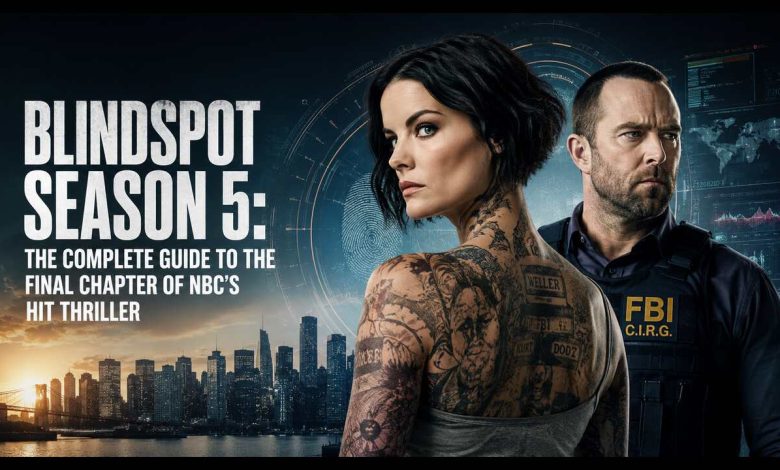
For five years, audiences tuned in every week to watch a tattooed mystery woman and a devoted team of FBI investigators unravel one of television’s most ambitious ongoing puzzles. When Blindspot Season 5 arrived on NBC in the spring of 2020, it carried the weight of expectation that only a series finale can carry. Fans who had followed Jane Doe, Kurt Weller, and the rest of the team since a duffel bag containing a naked, amnesiac woman appeared in the middle of Times Square knew this would be the last time they would see these characters chase down clues hidden in ink. What they may not have known was just how emotionally satisfying, action-packed, and narratively complete this closing season would turn out to be.
This guide walks through everything worth knowing about Blindspot’s fifth and final season: its premise, its cast, its episode-by-episode journey, and the themes that made it a fitting send-off for a show that reinvented the crime procedural formula. Whether you are revisiting the series from the beginning or jumping straight into its concluding chapter, this breakdown will help you appreciate what made the final season such a memorable piece of storytelling.
What Is Blindspot About?
Before diving into the specifics of the final season, it helps to remember the premise that hooked millions of viewers in the first place. Blindspot follows Jane Doe, a woman discovered with no memory of her identity and a body covered head to toe in elaborate, coded tattoos. Each marking turns out to be a clue pointing toward a crime, a conspiracy, or a piece of Jane’s forgotten past. An FBI task force led by Agent Kurt Weller takes on the responsibility of decoding these tattoos, and in doing so, the team finds itself entangled in international espionage, domestic terrorism, and a slow-burning romance between Jane and Weller that anchors much of the emotional core of the series.
Created by Martin Gero, the show built its identity around intricate puzzles, cryptic wordplay, and season-long mysteries that rewarded attentive viewers. Over four seasons, the series explored shifting alliances, hidden identities, and a shadowy organization known as Sandstorm, all while balancing case-of-the-week investigations with a serialized mythology that grew more layered with each passing year. By the time the fourth season wrapped, the stage was set for a final, decisive chapter.
The Road to a Final Season: Blindspot Season 5
Blindspot was renewed for its fifth season in the spring of 2019, with NBC confirming that this would be the series’ concluding run. Unlike earlier seasons, which typically ran over twenty episodes, the final season was trimmed to a tighter eleven-episode arc, a structure that allowed the writers to move briskly toward resolution without unnecessary filler. This shortened format meant every episode carried real narrative weight, pushing the plot forward at a pace that felt urgent and purposeful.
The season’s original premiere was pushed back by a matter of days due to scheduling around a comedy special, ultimately landing in early May 2020. Airing during an unusual period for network television, the final season found itself premiering amid a global shift in how people consumed entertainment, yet it still managed to draw a dedicated audience eager to see how the story would end.
The Story Picks Up: Season 5 Plot Overview
Blindspot Season 5 opens roughly two months after a devastating drone strike in Iceland that left the team scattered, grieving, and officially branded as international fugitives. This is a markedly different starting point than earlier seasons. Rather than working within the FBI’s structure, Jane, Weller, and their allies must now operate from the shadows, hiding from the very government agency they once served.
Complicating matters further is the ascension of Madeline Burke, a character who transitions from a recurring antagonist into the season’s central threat. Burke is elevated to director of federal law enforcement, granting her sweeping authority and resources. Her ultimate goal is chillingly ambitious: she seeks to align with a known terrorist organization and deploy a mind-altering substance called ZIP on a global scale, erasing the memories of world leaders in order to reshape international power structures under her own influence.
Against this backdrop, the fugitive team must accomplish several things simultaneously:
- Clear their names and restore their standing as law-abiding federal agents
- Expose Madeline Burke’s true nature to those who still trust her
- Track down and dismantle her plan to weaponize ZIP before it can be deployed
- Process the grief of losing one of their own during the Iceland strike
- Reconcile personal relationships strained by years of secrecy, betrayal, and sacrifice
This blend of large-scale conspiracy and intimate character work is where Blindspot’s final season truly shines. The writers understood that after five years of investment, audiences needed both a satisfying external plot and genuine emotional closure for the characters they had grown attached to.
Meet the Cast: Familiar Faces and Their Final Arcs
The fifth season brought back the core ensemble that had carried the show since its earliest episodes, while also expanding the role of a key supporting player into a series regular.
Jaimie Alexander as Jane Doe anchors the season as always, portraying a character who has evolved dramatically from the frightened, memory-less woman introduced in the pilot into a formidable, self-assured leader. Jane’s arc in the final season is defined by her determination to protect her found family and finally step out of the shadow of her manufactured past.
Sullivan Stapleton as Kurt Weller continues to serve as both Jane’s partner in the field and her romantic counterpart. The final season allows Weller’s character to reckon with years of trauma, leadership pressure, and his complicated relationship with duty versus love.
Rob Brown as Edgar Reade and Audrey Esparza as Tasha Zapata round out the tactical side of the team, each bringing their own emotional throughlines to the season, including matters of trust, loyalty, and personal sacrifice.
Ashley Johnson as Patterson remains the technical heart of the group, using her skills to decode threats and support the team from behind the scenes, while also navigating her own arc involving family and identity.
Ennis Esmer as Rich Dotcom, a fan-favorite character who evolved from an early antagonist into a beloved and often comedic ally, was promoted to series regular for this final chapter, reflecting how integral the character had become to the show’s chemistry.
Mary Elizabeth Mastrantonio as Madeline Burke serves as the season’s primary antagonist. Having recurred in the previous season, Mastrantonio’s role was expanded significantly, giving the character a chance to become one of the more memorable villains in the show’s run, someone whose ambition and manipulation feel genuinely dangerous.
Together, this ensemble delivers performances that reflect years of shared history, and the final season leans into that familiarity to create moments that feel earned rather than rushed.
Episode Highlights Across the Final Season
While avoiding a blow-by-blow rundown of every twist, it is worth touching on the general shape of the season’s eleven episodes, since the structure itself reflects a show firing on all cylinders as it approaches its conclusion.
The season opens with the team still reeling from loss, immediately establishing high stakes as Jane works to rescue an ally from a black site, calling on the help of a former rival to succeed. From there, the episodes alternate between globe-trotting missions, tense undercover operations, and quieter character-driven moments that allow the ensemble to breathe.
Midway through the season, a kidnapping plot forces Weller to confront ghosts from his past while the team races to protect their hidden base of operations. Later episodes escalate the stakes considerably, involving stolen artwork, international debts, and a series of puzzles that echo the show’s earliest seasons, when tattoo-based mysteries first captivated audiences.
As the season builds toward its finale, Madeline Burke’s plan comes into sharper focus. The team splits into smaller units to intercept her operations, infiltrate her network, and gather the evidence needed to expose her. Betrayal from within adds another layer of tension, forcing the characters to question who among their allies can truly be trusted.
The final stretch of episodes ties together threads from across the entire series, rewarding long-time viewers with callbacks to earlier seasons while still remaining accessible to those catching up. The series finale in particular was crafted to give closure to every major relationship, delivering a conclusion that many fans and critics described as emotionally resonant and true to the show’s identity.
Themes That Define the Final Season
What separates a strong series finale from an average one often comes down to thematic consistency. Blindspot Season 5 succeeds because it does not abandon the ideas that made the show compelling in the first place. Several themes stand out clearly across these final eleven episodes:
- Identity and self-determination: Jane’s entire arc has always revolved around discovering who she is beyond the identity that was constructed for her. The final season pushes this further, asking whether a person can define themselves independently of their past.
- Found family: The bond between the team members is treated as the emotional backbone of the season. Their loyalty to one another, even while operating as fugitives, reinforces the idea that chosen family can be as powerful as blood relation.
- Power and corruption: Madeline Burke’s storyline examines how institutional authority can be twisted toward personal ambition, a theme that resonates well beyond the show’s fictional world.
- Redemption and sacrifice: Several characters are given opportunities to atone for past mistakes, and the season does not shy away from asking its heroes to make difficult, costly choices.
These threads give the final season a sense of purpose that elevates it above a simple action-driven send-off. It feels like the conclusion of a story that always had something to say about trust, identity, and the price of doing the right thing.
Production and Filming Notes
Blindspot was known throughout its run for its distinctive use of New York City as a backdrop, incorporating recognizable landmarks into its storytelling in a way that made the city feel like an additional character. The final season continued this tradition while also drawing on the show’s history of shooting internationally, a practice that had previously taken the production to locations across Europe, South Africa, and beyond in earlier seasons.
The shortened eleven-episode order for the final season meant a tighter production schedule, but the crew and cast used that condensed timeline to their advantage, focusing energy on delivering a polished, purposeful conclusion rather than stretching the story thin.
Reception and Legacy: Blindspot Season 5
Critical and fan reception to Blindspot Season 5 final season was largely positive, particularly regarding how the show handled its central relationships and overarching mystery. Many longtime viewers praised the writers for resisting the temptation to introduce entirely new mythology this late in the game, instead choosing to resolve existing threads with care. The finale, in particular, was singled out for successfully balancing action, emotional payoff, and thematic closure, a difficult combination for any series to pull off in its last outing.
Over its full run, Blindspot aired one hundred episodes across five seasons, a substantial achievement for a network drama built around a premise as unconventional as tattoo-based mysteries. The show’s willingness to embed elaborate puzzles into its episode titles and storylines, from anagrams to palindromes to hidden phrases, became one of its defining creative signatures, and the final season honored that legacy by staying true to the intricate, puzzle-box storytelling style that fans had come to expect.
Where the Story Leaves Its Characters
Without spoiling the finer details for those who have not yet watched, it is fair to say that Blindspot Season 5 aims to give every major character a meaningful ending. Jane’s journey toward self-acceptance reaches a natural conclusion, Weller’s arc as both an agent and a partner is given proper resolution, and the supporting cast members each receive moments that reflect their growth across the series. The show’s writers approached the finale with clear intention, ensuring that fans who had spent five years with these characters would walk away with a sense of closure rather than lingering uncertainty.
Why the Final Season Still Resonates With Fans
Even years after its original broadcast, Blindspot Season 5 continues to attract new viewers thanks to streaming availability, and the appeal is easy to understand. It combines the tension of a high-stakes conspiracy thriller with genuine emotional stakes, all wrapped around characters who feel fully realized after years of development. For newcomers discovering the series for the first time, the final season serves as proof that a long-running network drama can stick the landing, delivering a conclusion that respects both its plot and its people.
At Reuterings, we appreciate stories that reward patience and attention to detail, and Blindspot’s final season is exactly that kind of television. It is a season built for viewers who enjoy piecing together clues alongside the characters, who want their favorite relationships to reach satisfying conclusions, and who value a series finale that feels like a genuine ending rather than an afterthought.
Final Thoughts: Blindspot Season 5
Blindspot Season 5 stands as a strong, thoughtful conclusion to a series that spent five years reinventing what a crime procedural could look like. By narrowing its focus to eleven purposeful episodes, the final season avoided the common pitfall of dragging out a story past its natural conclusion. Instead, it delivered a tightly plotted, emotionally grounded finale that honored the show’s central mysteries while giving its beloved characters the send-off they deserved.
For anyone who followed Jane Doe’s journey from an unidentified woman in Times Square to a fully realized hero fighting to protect the people she loves, the fifth season offers exactly the kind of closure that makes a long television journey worthwhile. It is a reminder that even in a genre crowded with procedural dramas, a show willing to commit fully to its characters and its central puzzle can leave a lasting impression, one that continues to bring new viewers into the fold long after its original broadcast ended.