
Gut-Brain Connection: How Digestive Health Affects Mood and Mental Clarity
Introduction
Have you ever felt butterflies in your stomach before an important meeting? Or noticed that stress tends to upset your digestion? These are not coincidences. They are real, measurable signals from one of the most fascinating relationships in the human body the gut-brain connection.
For a long time, most people thought of the gut as simply a tube that processes food. But science has moved far beyond that. Researchers now understand that the gut and brain are in constant, two-way communication, and that what happens in your digestive system can directly shape how you think, feel, and function every single day.
In this article, we will break down what the gut-brain connection actually is, how your digestive health influences your mood and mental clarity, and what practical steps you can take to support both.
What Is the Gut-Brain Connection?
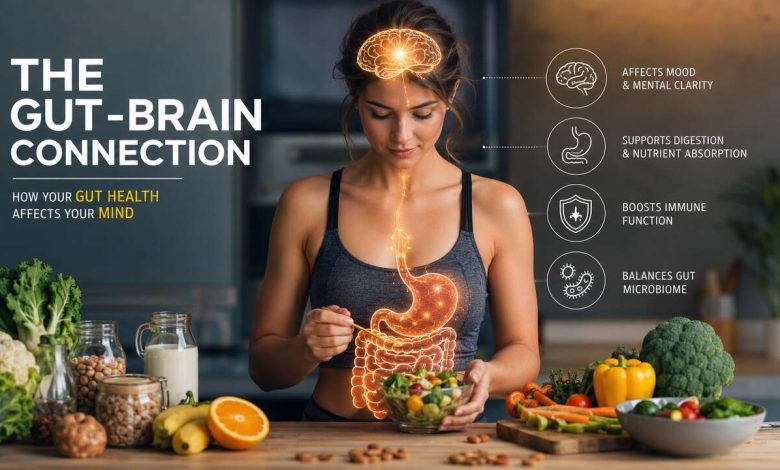
The gut-brain connection, also known as the gut-brain axis, refers to the complex communication network that links your central nervous system with your enteric nervous system the vast web of nerve cells that lines your gastrointestinal tract.
Your gut contains over 500 million neurons. That is more than in your spinal cord. Because of this, scientists often refer to the gut as the second brain. It does not think in the way your brain does, but it processes information, responds to stimuli, and sends signals upward through the valgus nerve one of the longest nerves in the body directly to the brain.
This communication runs in both directions. Your brain sends signals to your gut, which is why anxiety can trigger stomach cramps or nausea. And your gut sends signals back to your brain, influencing your emotional state, stress response, and cognitive performance.
The Role of the Gut Microbiome in Brain Health
At the heart of the gut-brain connection is your gut microbiome the community of trillions of bacteria, fungi, and other microorganisms living inside your digestive tract. This microbial ecosystem is not just there to help you break down food. It plays an active role in regulating how your brain works.
Here is how:
1. Serotonin Production
Most people associate serotonin with the brain. But approximately 90 to 95 percent of the body’s serotonin is actually produced in the gut. Serotonin is a neurotransmitter that plays a key role in regulating mood, emotional stability, sleep quality, and appetite.
When the gut microbiome is out of balance a condition known as gut dysbiosis serotonin production can be disrupted. This helps explain why so many people with digestive issues also struggle with low mood, irritability, and poor sleep, even when nothing appears to be “wrong” emotionally in their life.
2. The Vagus Nerve Pathway
The vagus nerve acts as the main highway between the gut and the brain. Research suggests that up to 80 percent of the signals travelling along the vagus nerve flow from the gut to the brain, not the other way around. This means the gut is constantly sending information upward, and the state of your digestive health has a direct influence on your mental and emotional state.
When the gut microbiome is healthy and diverse, the signals travelling this pathway tend to support calm, clear thinking. When dysbiosis is present, those signals can contribute to heightened stress reactivity, brain fog, and low mood.
3. Inflammation and the Gut-Brain Connection
A disrupted gut microbiome can lead to increased intestinal permeability sometimes referred to as leaky gut. When the gut lining becomes more permeable than it should be, bacterial fragments and partially digested food particles can cross into the bloodstream. This triggers an immune response and leads to systemic inflammation.
Chronic low-grade inflammation has been increasingly linked to depression, anxiety, and cognitive decline. The gut is often where this inflammatory process begins.
4. Neurotransmitter Precursors
Beyond serotonin, gut bacteria help produce or regulate the precursors for other important brain chemicals, including dopamine, GABA (gamma-aminobutyric acid), and acetylcholine. GABA, for example, is the brain’s primary calming neurotransmitter. Certain strains of gut bacteria directly influence how much GABA your nervous system has access to, which affects your ability to manage stress and maintain a sense of emotional balance.
How Poor Gut Health Affects Your Mood
The research connecting gut health and mood is growing rapidly. Studies have found that people with conditions like irritable bowel syndrome (IBS) have significantly higher rates of anxiety and depression compared to the general population. While it was once assumed that the psychological conditions were causing the gut symptoms, newer research suggests the relationship runs in both directions.
Common signs that your gut health may be affecting your mood include:
- Persistent low mood: That does not lift with rest, exercise, or lifestyle changes
- Anxiety that feels physical: Tightness in the chest, stomach discomfort, or a constant sense of unease
- Mood swings: That seem unrelated to life events
- Emotional fatigue: Feeling emotionally flat or overwhelmed without an obvious cause
- Heightened stress response: Reacting to minor stressors more intensely than usual
None of these symptoms alone points definitively to a gut issue. But when they appear alongside digestive complaints bloating, irregular bowel movements, cramping, or food sensitivities the gut is well worth investigating.
How Poor Gut Health Affects Mental Clarity
Mental clarity the ability to think clearly, focus, and retain information is something most people take for granted until they lose it. When brain fog sets in, everyday tasks feel harder than they should. Concentration drifts. Words that normally come easily feel just out of reach.
The gut is a frequently overlooked contributor to this experience. Here is why:
Nutrient absorption: The gut is responsible for absorbing the vitamins and minerals that the brain depends on including B vitamins, magnesium, zinc, and omega-3 fatty acids. When gut function is compromised, absorption is impaired, and the brain is the first to feel the effects.
Short-chain fatty acids: Healthy gut bacteria ferment dietary fibre and produce short-chain fatty acids (SCFAs) such as butyrate, propionate, and acetate. These compounds support the integrity of both the gut lining and the blood-brain barrier. Butyrate in particular has been shown to have neuroprotective properties and plays a role in supporting healthy brain function.
Inflammatory signaling: As mentioned earlier, systemic inflammation originating from the gut can reach the brain, where it interferes with the neural processes involved in memory, focus, and decision-making. This is sometimes described as neuroinflammation, and it is one of the more active areas of research in brain health today.
Signs Your Gut May Be Affecting Your Brain
If you are experiencing any of the following, your gut health may be worth examining:
- Brain fog that persists despite adequate sleep
- Difficulty concentrating or following complex thoughts
- Memory lapses that feel out of character
- Fatigue that rest does not resolve
- Low motivation or a general sense of mental flatness
- Mood changes that coincide with digestive symptoms
These experiences are common, but they are not inevitable. And they are often addressable once the root cause is identified.
What You Can Do to Support the Gut-Brain Connection
The good news is that the gut microbiome is responsive. It changes with diet, lifestyle, sleep, and stress management. Supporting it does not require a complete overhaul of your life it requires consistent, informed choices.
Eat for Microbial Diversity
A diverse gut microbiome is a resilient one. The single most effective dietary strategy for improving microbial diversity is increasing the variety of plant foods in your diet. Research from the American Gut Project found that people who ate 30 or more different plant foods per week had significantly more diverse gut microbiomes than those who ate 10 or fewer.
Focus on:
- Prebiotic-rich foods: Garlic, onions, leeks, asparagus, chicory root, and oats feed beneficial bacteria
- Fermented foods: Natural yoghurt, kefir, sauerkraut, kimchi, miso, and kombucha introduce live cultures that may support microbial balance
- Polyphenol-rich foods: Berries, dark chocolate, green tea, and olive oil contain compounds that selectively feed beneficial bacterial species.
Reduce Ultra-Processed Food Intake
Diets high in refined sugars, artificial additives, and ultra-processed foods are consistently associated with reduced microbial diversity and higher levels of inflammatory species. Reducing these foods is one of the most impactful changes you can make for both gut and brain health.
Manage Stress Actively
Because the gut-brain axis runs in both directions, chronic stress is genuinely harmful to the gut. Sustained stress can alter gut motility, reduce the diversity of the microbiome, and increase intestinal permeability. Practices such as regular physical activity, mindfulness, adequate sleep, and time in natural environments all have documented benefits for both stress regulation and gut health.
Consider a Gut Health Test
If you are experiencing persistent symptoms digestive or psychological a gut health test can provide a detailed picture of what is actually happening inside your microbiome. Rather than making changes based on general advice, a microbiome test gives you specific information about which bacterial species are underrepresented, whether inflammation markers are elevated, and how your gut’s functional output compares to healthy reference populations.
This is particularly useful when symptoms have not responded to standard dietary changes, or when you want to take a more targeted and evidence-based approach to improving your mental and digestive health together.
The Research Behind the Gut-Brain Connection
The science in this area has expanded considerably. Studies involving fecal microbiota transplants (FMT) have shown that transferring gut bacteria from one individual to another can alter mood and anxiety-related behaviors in animal models. Human trials are still in early stages, but the findings are pointing in a consistent direction: the composition of your microbiome genuinely influences how you feel.
A landmark 2019 study published in Nature Microbiology found that two specific bacterial genera Coprococcus and Dialister were consistently depleted in people diagnosed with depression, regardless of antidepressant use. This kind of finding does not establish direct causation, but it underscores the depth of the relationship between microbial composition and mental health.
Final Thoughts
The gut-brain connection is not a wellness trend. It is a well-documented biological relationship that shapes your mood, your ability to think clearly, and your resilience to stress. When the gut is in good health diverse, balanced, and functioning well the benefits extend far beyond digestion.
If you have been managing low mood, anxiety, brain fog, or fatigue without clear improvement, looking at your gut health is a reasonable and evidence-based next step. A gut health test can give you the specific information you need to move from general changes to targeted action and from guesswork to genuine understanding of what your body needs.