Slow Cooker Recipes: 40+ Easy, Budget-Friendly Meals for Busy UK and US Families
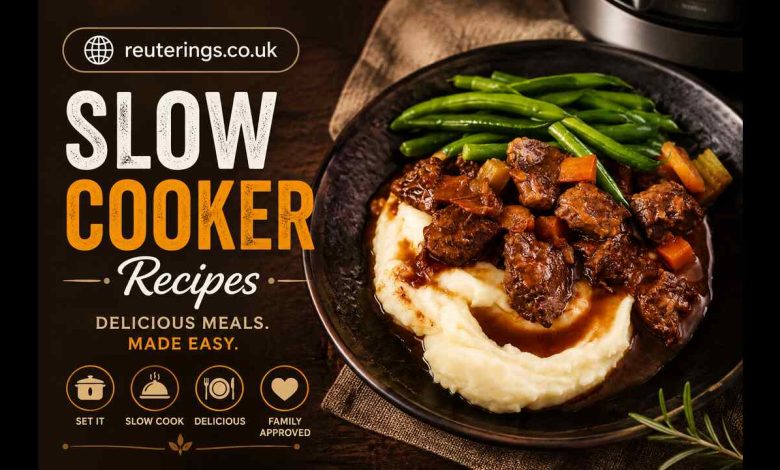
There’s a particular kind of relief in walking through the front door on a cold, dark evening to the smell of dinner that’s already done. No last-minute scramble, no argument about whose turn it is to cook, just a pot of something rich and comforting that’s been quietly looking after itself since breakfast. That’s the appeal behind slow cooker recipes, and it’s a big part of why this unassuming countertop appliance has become one of the most-used pieces of kit in kitchens across the UK and US.
Slow cooking isn’t new. Home cooks have been simmering stews and braises low and slow for generations, long before the modern slow cooker existed. But it’s having a real moment again. Rising food and energy prices have made cheap cuts of meat and low-wattage cooking genuinely appealing on both sides of the Atlantic, and a generation of people juggling work, school runs, and everything in between has rediscovered how useful it is to prep something in ten minutes flat and forget about it for the next eight hours.
This guide pulls together some of the best slow cooker recipes for busy weeknights, a look at how slow cooking fits into healthier and more budget-conscious eating, and a set of practical tips that will genuinely improve your results including guidance drawn from official food safety advice in both the UK and US. Whether you’re cooking for a family of five in Ohio or a flat share in Manchester, the fundamentals are exactly the same.
Easy Slow Cooker Recipes for Busy Weeknights
The best easy slow cooker recipes share one quality: you can throw everything in before you’ve finished your morning coffee and have a proper meal on the table twelve hours later without touching it again. That’s really the whole point of the appliance. If a recipe has you checking, stirring, or babysitting it on the hob every hour, it isn’t doing its job.
A handful of weeknight staples show up again and again in kitchens across the UK and US, and for good reason. They’re forgiving of a bit of extra time in the pot, they freeze well, and they turn inexpensive cuts of meat into something genuinely worth coming home to.
Comfort food classics
- Mississippi pot roast chuck steak (chuck roast, in American terms) cooked low and slow with butter, ranch seasoning, and pepperoncini until it falls apart at the touch of a fork.
- Chilli con carne mince, kidney beans, and a decent amount of tomatoes and spice; it also freezes brilliantly in individual portions.
- Beef stew with dumplings stewing steak, carrots, swede (rutabaga, if you’re in the US), and a rich stock-based gravy.
- Sausage and bean casserole a proper British Sunday-into-Monday staple that barely needs any prep.
- Gammon in cider or honey a whole gammon joint cooked low and slow, then finished under the grill for sticky, caramelized edges.
- Pulled pork pork shoulder (pork butt, in the US), a good barbecue sauce, and soft buns for that classic fall-apart texture
- Chicken and mushroom stew a lighter, creamier alternative that pairs well with rice or a hunk of crusty bread.
- Cottage pie filling mince and vegetables cooked all day, then topped with mash and finished under the grill for the last twenty minutes.
Soups that essentially make themselves
- Minestrone, built around whatever vegetables need using up
- Lentil and bacon soup, thick enough to eat with a fork
- Chicken and sweetcorn soup
- Roasted tomato and red pepper soup
- Leek and potato soup, blended smooth at the end
- French onion soup, topped with a cheese-crusted crouton once it’s out of the pot
- Split pea and ham soup
- Butternut squash and ginger soup
Recipes with a bit more global flavor
- Thai green chicken curry with coconut milk
- Moroccan chickpea and apricot tagine a genuinely excellent vegetarian option
- Mexican-style pulled chicken for tacos or burrito bowls
- Chicken tikka masala, built from a simple spice paste rather than a jar of sauce
- Jerk-spiced chicken thighs
- Hungarian-style beef goulash with paprika and peppers
- Japanese-inspired teriyaki chicken thighs, finished with sesame seeds and spring onion
- Greek-style lemon chicken with orzo
- Cuban-style black beans with rice
- Spanish-style chickpea and chorizo stew
Don’t forget breakfast and pudding
Slow cookers aren’t just for savory mains. Overnight porridge or steel-cut oats are ready the moment you wake up, and the same pot can turn out poached pears in spiced wine, a proper sticky toffee pudding, rice pudding, chocolate fudge cake, or baked apples with cinnamon and a spoonful of honey all with barely any hands-on effort.
If you want to get properly organized, spend twenty minutes on a Sunday portioning raw meat, vegetables, and seasoning into freezer bags one “dump bag” per meal. Defrost overnight in the fridge, then tip the whole bag into the slow cooker before you leave for work. It’s one of the simplest ways to guarantee you’ll actually eat something decent on a Wednesday night instead of defaulting to a takeaway menu.
Healthy Slow Cooker Recipes and Smart Meal Prep
Slow cooking and healthy eating go together more naturally than people expect. Because everything goes into one pot under your control, there’s no hidden oil from frying and no bread-crumbed coating, and there’s plenty of room for pulses, beans, and vegetables that hold up well over a long cook. Lean cuts that would turn tough and dry in a hot oven become tender instead, because the low, moist heat has hours to do the work that a quick sear can’t.
Some of the best healthy slow cooker recipes worth adding to your rotation:
- Turkey and quinoa chilli a leaner spin on the classic, with extra fibre from the quinoa
- Red lentil dahl with ginger, garlic, and turmeric cheap, filling, and naturally vegan
- Three-bean vegetable chilli, loaded with peppers and sweet potato
- Chicken and vegetable soup, built on a proper bone broth base
- Ratatouille aubergine, courgette (zucchini), and tomatoes, finished with fresh basil
- Pulled chicken in a lighter, lower-sugar barbecue sauce
- Beef and vegetable bolognese sauce, freezer-friendly and easy to double
- Black bean and sweet potato stew
- Chicken chasseur with mushrooms and a light tomato sauce
Batch cooking is where the healthy-eating case really stacks up. Cook a large pot on a Sunday, portion it into the fridge and freezer, and you’ve effectively meal-prepped your lunches and dinners for the week without touching the hob again. That matters for your wallet as much as your waistline: a slow cooker takes cheaper cuts of meat, dried pulses, and root vegetables all relatively inexpensive ingredients and turns them into meals that don’t taste like a compromise.
There’s also a genuine cost argument for UK readers in particular. Slow cookers are low-wattage by design, typically drawing somewhere between 100 and 250 watts depending on the model and setting. Based on current UK electricity prices, a full day’s cooking on low tends to cost somewhere in the region of 20p to 50p considerably less than running a conventional oven for even an hour, which can easily cost 50p to £1 or more. For a household trying to keep energy bills down without resorting to convenience food, that adds up to a meaningful saving over a year of regular use.
Suggested internal links: if reuterings.co.uk already has content on household budgeting, cutting energy bills, or family meal planning, this paragraph is a natural place to link out to it for example, anchor text like “our guide to cutting your energy bills” or “budget meal planning for families.”
For US readers, the maths works slightly differently because electricity pricing and appliance wattage vary more by state, but the underlying principle holds: a slow cooker uses a fraction of the energy of an oven left on for hours, and it does it while you’re at work or asleep rather than competing for hob space at 6pm.
Slow Cooker Tips for Perfect Results Every Time
Even with such a forgiving appliance, a few small habits separate a genuinely great result from a watery, under seasoned one. These tips combine general best practice with official food safety guidance from the USDA in the US and the UK government, which is worth following closely whenever meat or poultry is involved.
Getting the basics right
- Fill the pot at least half full and no more than two-thirds full. Too little food and it can overcook or scorch; too much and it won’t cook evenly.
- Don’t lift the lid unless you have to. Every time you do, the internal temperature drops noticeably, and it can take up to twenty minutes to recover resist the urge to check.
- Always thaw meat and poultry before it goes into the pot. Frozen meat spends too long in the temperature “danger zone,” the range in which bacteria multiply fastest, before the slow cooker catches up.
- Cut large joints of meat down where a recipe suggests it. Smaller, more even pieces cook through more reliably than one large lump.
- Put root vegetables like potatoes, carrots, and swede at the bottom, closest to the heat source, since they take longer to cook than meat.
- Save dairy, delicate herbs, and anything you want to stay fresh soft herbs, cream, soured cream, pasta for the final thirty to sixty minutes.
Getting real flavour out of it
- Browning meat and softening onions in a pan first is optional, but it adds a depth of flavour that dump-and-go recipes can’t quite match. Five minutes of extra effort at 7am is usually worth it.
- If a sauce looks thin at the end, take the lid off and switch to high for the last thirty to forty-five minutes to let it reduce, or stir in a small cornflour-and-water slurry.
- Season at the end, not just the beginning. Long cooking mutes some spices and concentrates others, so a final taste-and-adjust makes a real difference.
Staying safe Food safety in a slow cooker isn’t complicated, but it’s worth taking seriously, particularly with poultry and minced meat. According to official USDA guidance, slow cookers typically cook food at between 170°F and 280°F, which is more than hot enough to destroy harmful bacteria over a normal cooking cycle, provided a few basic rules are followed. Keep perishable ingredients refrigerated until the moment you add them to the pot, use a food thermometer if you’re ever unsure, and refrigerate leftovers within two hours of cooking rather than letting the pot cool on the side.
In the UK, official government cooking guidance recommends cooking food until it reaches a core temperature of 70°C for two minutes, or checking that meat is steaming hot all the way through with no pink remaining and the juices running clear. In the US, poultry has a specific minimum safe internal temperature of 165°F (74°C). A cheap probe thermometer removes all the guesswork on either side of the Atlantic.
Low vs high: a quick conversion
If a recipe gives you a low-setting time and you’re short on hours, here’s a rough guide for switching to the high setting, based on the commonly used rule of thumb that one hour on high is roughly equivalent to two hours on low:
| Low setting | High setting (approx.) |
|---|---|
| 4 hours | 2 hours |
| 6 hours | 3 hours |
| 8 hours | 4 hours |
| 10 hours | 5 hours |
Treat this as a starting point rather than gospel. Every model runs slightly differently, so the safest approach is always to check that meat has reached a safe internal temperature rather than relying on the clock alone.
Frequently Asked Questions
Is it safe to leave a slow cooker on all day while I’m at work? Yes. Slow cookers are designed for exactly this. They’re low-wattage, sit on a stable, heatproof base, and are built to run for eight hours or more without supervision. Place it on a flat, heat-resistant surface away from the edge of the counter, keep the lid on, and avoid using an extension lead.
Can I put frozen meat straight into a slow cooker? It’s not recommended. Frozen meat takes too long to pass through the temperature range where bacteria multiply fastest, which can leave food unsafe even after a full cooking cycle. Defrost meat and poultry fully in the fridge before it goes into the pot.
What’s the difference between a slow cooker and a Crock-Pot? None, functionally. “Crock-Pot” is a US brand name that became so popular it’s now used generically for any slow cooker, in much the same way “Hoover” is used for vacuum cleaners in the UK. A slow cooker recipe written for a “Crock-Pot” will work perfectly well in any other brand’s slow cooker.
Do slow cookers actually save money on energy bills? Yes, significantly. Because they run at a low wattage over a long period rather than a high wattage for a short burst, slow cookers are one of the cheapest kitchen appliances to run typically a fraction of the cost of an oven for the same meal.
Can you overcook food in a slow cooker? It’s harder than with an oven or hob, but it can happen, especially with delicate ingredients like chicken breast, fish, or dairy, which can turn rubbery or split if left too long. Root vegetables and tougher cuts of meat, by contrast, are far more forgiving and often improve with extra time.
Final Thoughts
Good slow cooker recipes aren’t really about following instructions to the letter. They’re about understanding a handful of principles the right cut of meat, the right amount of liquid, a bit of patience with the lid and then building a rotation of meals that fit around your week rather than dictating it. Start with one or two of the comfort classics above, get a feel for how your particular model runs, and build out from there. Within a month or two, you’ll likely have three or four go-to slow cooker recipes that need almost no thought at all, which is really the entire point.
It doesn’t matter whether the postcode is in Leeds or the zip code is in Los Angeles the appliance does the same job, turning cheap, honest ingredients into a proper meal while you get on with the rest of your day.
What’s the one slow cooker recipe you keep coming back to? We’d love to hear about it in the comments, and if you try any of the ideas above, let us know how they turned out.
Read-interesting-Information-About-Blogs-Entertainment-At: reuterings.co.uk