
Bowel Cancer vs IBS Symptoms: How to Tell the Difference and When to See a Doctor
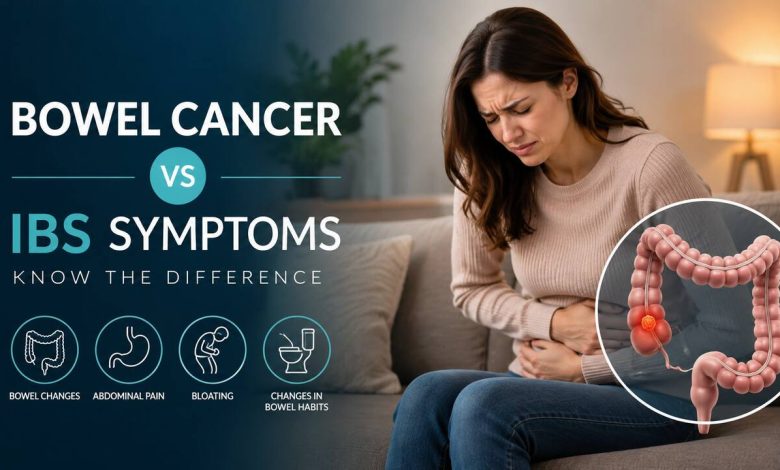
There is a moment that many people experience sitting in the bathroom, noticing something is not quite right, and immediately wondering whether it is something serious. The stomach cramps that have been coming and going for weeks. The change in bowel habits that does not seem to be settling. The bloating that feels different from anything before.
For most people, the instinct is to assume it is irritable bowel syndrome. IBS is common, widely discussed, and often dismissed as something to simply manage rather than investigate. But some of the symptoms that appear in IBS also appear in bowel cancer and knowing the difference between the two could, in some cases, be the difference between catching a cancer early and missing it entirely.
This guide explains how bowel cancer vs IBS symptoms overlap, where the key differences lie, and what signs should always prompt a visit to your GP regardless of what you suspect the cause to be.
Why Understanding Bowel Cancer vs IBS Symptoms Matters
Bowel cancer also referred to as colorectal cancer is one of the most commonly diagnosed cancers in the United Kingdom, affecting roughly 1 in 17 men and 1 in 20 women during their lifetime. It is also one of the most treatable cancers when caught early. The problem is that in its early stages, it can produce symptoms that look and feel almost identical to irritable bowel syndrome, which affects an estimated one in five people in the UK at some point in their lives.
This symptom overlap creates a genuine clinical challenge and a real-world risk. People who have been managing IBS for years sometimes dismiss new or changing symptoms as another flare-up. People who have never been diagnosed with IBS may assume their digestive discomfort is something mild and prefer to wait and see. In both situations, a delay in seeking medical assessment can allow bowel cancer to progress to a more advanced and harder-to-treat stage.
Understanding which symptoms are shared between the two conditions, and which ones are more distinctly associated with cancer, puts you in a much stronger position to make informed decisions about your health.
Bowel Cancer vs IBS Symptoms: What Both Conditions Have in Common
Several symptoms appear frequently in both conditions, which is precisely why distinguishing between them without medical assessment can be so difficult.
Bowel Cancer vs IBS Symptoms: Changes in Bowel Habits
Both IBS and bowel cancer can cause noticeable changes in how often you go to the toilet, the consistency of your stools, and whether you experience periods of diarrheas’, constipation, or a combination of both. In IBS, these changes are often triggered by stress, certain foods, hormonal fluctuations, or other identifiable lifestyle factors. In bowel cancer, changes in bowel habits tend to develop more gradually and are not linked to any clear trigger they simply persist and, in many cases, worsen over time.
Abdominal Pain and Cramping
Abdominal discomfort, cramping, and pain in the lower or central abdomen are characteristic of both conditions. IBS pain frequently occurs alongside bowel movements and often improves after passing stools or wind. Cancer-related abdominal pain does not necessarily follow this pattern it may be more persistent, present at rest, or unrelated to the timing of bowel movements.
Bloating and Fullness
A feeling of fullness, distension, or bloating is one of the most commonly reported IBS symptoms, particularly in women. It is also reported by some people with bowel cancer, especially as a tumor grows and begins to affect how the bowel functions. On its own, bloating is rarely cause for alarm but bloating that is persistent, worsening, or accompanied by other symptoms should not be dismissed.
Fatigue and Low Energy
Tiredness is a feature of both conditions. In IBS, fatigue is often related to disrupted sleep, pain, or the emotional burden of managing a chronic condition. In bowel cancer, fatigue frequently has a more specific cause: slow internal bleeding from a tumor leads to iron-deficiency anemia, reducing the number of healthy red blood cells and leaving the body less able to carry oxygen efficiently. This type of cancer-related fatigue often does not improve with rest and may be accompanied by breathlessness or paleness.
The Key Differences You Need to Know
While there is significant overlap, certain symptoms are either absent in IBS or significantly more associated with bowel cancer. These are the red flag signs that should always prompt a prompt medical assessment, regardless of any pre-existing IBS diagnosis.
Blood in the Stool
This is one of the most important distinctions between the two conditions. IBS does not cause bleeding. If you notice blood in your stool whether it appears bright red on the toilet paper or in the bowl, or makes your stools appear darker or almost tar-like this is not an IBS symptom. Rectal bleeding has several possible causes, including hemorrhoid’s, which are far more common than cancer. However, any rectal bleeding that occurs without an obvious explanation, or alongside other symptoms, should always be evaluated by a GP. It should never be assumed to be hemorrhoid’s without a medical assessment.
Bowel Cancer vs IBS Symptoms: Unexplained Weight Loss
Losing weight without changing your diet or exercise habits is not associated with IBS. While some people with IBS may lose weight because they restrict certain foods to manage their symptoms, true unexplained weight loss where appetite decreases and the body loses weight without any deliberate effort is a warning sign that should be taken seriously. In bowel cancer, this type of weight loss can occur because cancer alters how the body uses energy and nutrients.
Feeling of Incomplete Emptying
Feeling as though the bowel has not fully emptied after using the toilet medically described as tenesmus is reported more commonly in bowel cancer than in IBS. This sensation of incomplete evacuation can cause people to return to the toilet repeatedly without passing anything significant. While it can occur in other conditions, persistent tenesmus warrants medical investigation.
A Lump in the Abdomen
IBS does not produce a palpable lump. If you notice an unusual mass or swelling in your abdomen or around the rectal area, this is not a symptom that can be attributed to a functional condition like IBS and should be assessed by a doctor without delay.
Progressive vs Fluctuating Pattern
One of the most clinically significant differences between IBS and bowel cancer is the trajectory of symptoms. IBS symptoms typically fluctuate they come and go, tend to be linked to identifiable triggers, and often improve with dietary changes, stress management, or medication. Bowel cancer symptoms, by contrast, tend to be progressive. They do not resolve between flares. They do not improve with dietary adjustment. They gradually worsen over weeks and months.
If symptoms that you assumed were IBS have been consistently present for three weeks or more and show no sign of improving, this is a clear signal to seek medical assessment regardless of any previous diagnosis.
Who Is at Higher Risk When Comparing Bowel Cancer vs IBS Symptoms
Understanding your personal risk level is an important part of interpreting symptoms. Certain factors are known to increase the likelihood of developing bowel cancer, and if any of these apply to you alongside persistent digestive symptoms, the threshold for seeking medical advice should be lower.
Age is one of the most significant factors. Bowel cancer is considerably more common in people over 50, though cases among younger adults are rising. A family history of bowel cancer particularly in a first-degree relative such as a parent or sibling roughly doubles personal risk. Inherited genetic conditions including Lynch syndrome and familial adenomatous polyposis carry a substantially elevated lifetime risk and require specific monitoring programmers.
Long-term inflammatory bowel disease, including Crohn’s disease and ulcerative colitis, increases risk over time. Lifestyle factors including a diet low in fibre and high in red or processed meat, physical inactivity, obesity, heavy alcohol consumption, and smoking have all been associated with elevated colorectal cancer risk.
None of these factors mean that bowel cancer is inevitable. But they do mean that any persistent or changing symptoms deserve a more prompt and thorough medical assessment than might otherwise be the case.
When Should You See a GP
The following symptoms should always prompt a visit to your GP, regardless of whether you already have an IBS diagnosis or believe your symptoms are mild.
Any rectal bleeding or blood in the stool that cannot be explained by a known cause should be assessed. A change in bowel habits that has lasted three weeks or more without a clear reason warrants investigation. Unexplained weight loss alongside any digestive symptoms is a combination that always merits a medical review. Persistent abdominal pain that does not follow the typical IBS pattern, or that has changed in character, should be discussed with a doctor. Fatigue that does not improve with rest, particularly when accompanied by any of the symptoms above, may indicate anemia and should be investigated with a blood test.
If you already have IBS and your symptoms have recently changed becoming more persistent, more severe, or accompanied by new symptoms this change in pattern should not be attributed to IBS without reassessment. IBS can coexist with bowel cancer, and a previous diagnosis does not eliminate the possibility of a separate condition developing.
What to Expect at Your GP Appointment
Many people delay seeing a doctor because they are unsure what to expect or feel embarrassed about discussing bowel-related symptoms. It helps to know that GPs deal with these conversations regularly and will not find them unusual or awkward.
At your appointment, your GP will ask about your symptoms in detail how long you have had them, whether they are worsening, any family history of bowel cancer, and any relevant lifestyle factors. They may carry out a physical examination of the abdomen. They are likely to arrange blood tests to check for anemia and inflammation. They may offer a faecal immunochemical test, or FIT, which checks for trace amounts of blood in a stool sample. Depending on the results, they may refer you to a specialist for further investigation including a colonoscopy, which allows a direct visual examination of the full length of the large bowel.
The important thing is not to delay. Attending your GP with digestive symptoms does not mean you are overreacting. It means you are being appropriately careful about your health.
The Role of NHS Screening in Identifying Bowel Cancer vs IBS Symptoms
In England, Scotland, Wales, and Northern Ireland, the NHS offers home bowel cancer screening to eligible individuals aged 50 to 74 through the faucal immunochemical test programmer. This simple test requires a small stool sample and can detect trace amounts of blood that may not be visible to the naked eye an early indicator of bowel cancer or of polyps that could develop into cancer over time.
It is important to understand that screening is designed for people who do not currently have symptoms. If you are already experiencing symptoms, you should contact your GP directly rather than waiting for your next screening invitation. Symptomatic individuals need a clinical assessment, not just a home screening kit.
Final Thoughts on Bowel Cancer vs IBS Symptoms
IBS and bowel cancer share enough symptoms that distinguishing between them without medical assessment is genuinely difficult, and in some cases impossible. The most important thing to understand is that a previous IBS diagnosis does not provide reassurance if symptoms have changed or worsened. Certain symptoms particularly rectal bleeding, unexplained weight loss, a persistent feeling of incomplete bowel emptying, and symptoms that have been present for three weeks or more without improvement should always be discussed with a GP.
Bowel cancer is highly treatable when detected early. The challenge is that early-stage bowel cancer often produces symptoms that are easy to explain away. Knowing the differences between bowel cancer vs IBS symptoms, and being willing to seek medical advice when something does not feel right, is one of the most valuable steps you can take for your long-term health.