What Is Mofongo? A Complete Guide to Puerto Rico’s Most Iconic Dish
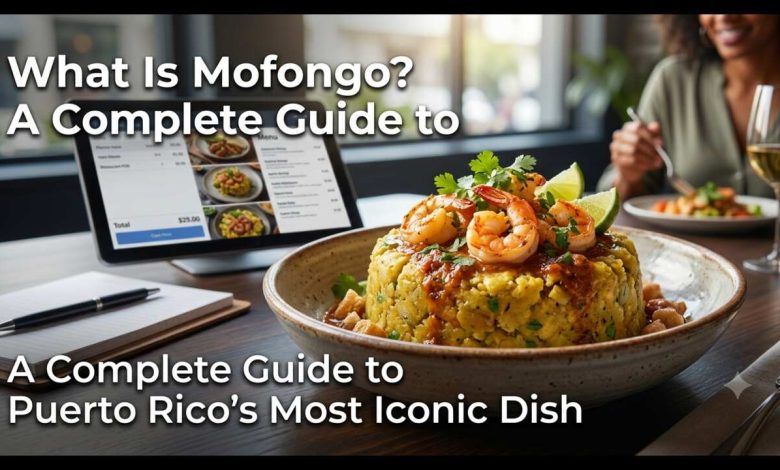
If you have ever sat down at a Puerto Rican restaurant and watched a golden, tightly packed mound arrive at the table, still warm and fragrant with garlic, chances are you were looking at mofongo. It is one of those dishes that manages to be humble and celebratory at the same time, a plate that shows up at Sunday family dinners just as often as it does at high-end restaurant menus in San Juan. For anyone who has never tried it, or anyone who has eaten it once and wants to understand why it holds such a special place in Caribbean cooking, this guide walks through everything worth knowing about mofongo, from its roots to its many modern variations.
What Is Mofongo, Exactly?
At its core, mofongo is a savory mashed plantain dish made from green, unripe plantains that are fried, then pounded together with garlic, salt, and a fat such as olive oil, butter, or lard. Crispy pork cracklings, known as chicharrón, are often folded into the mixture as well, giving the finished dish a rich, slightly smoky depth. The mashing traditionally happens in a wooden mortar and pestle called a pilón, which shapes the mixture into a dense, rounded mound.
Unlike a soft mashed potato, mofongo has structure and bite. The fried plantain gives it a slightly crisp edge, while the inside stays moist and packed with flavor. It can be served plain as a side, hollowed out and filled with meat, seafood, or vegetables, or plated alongside a bowl of warm broth for dipping. However it lands on the table, mofongo is instantly recognizable and unmistakably Puerto Rican.
Where Mofongo Comes From: A Dish Built on Three Cultures
Understanding mofongo means understanding a piece of Caribbean history. The dish is widely regarded as Puerto Rico’s unofficial national dish, and its story reflects the island’s complicated colonial past.
Food historians trace the technique behind mofongo back to West and Central Africa, particularly to Angolan communities who were forcibly brought to Puerto Rico as enslaved laborers beginning in the 1500s. These communities used wooden mallets to pound large quantities of starchy foods, then softened the mixture with liquid and fat. In fact, many researchers believe the very name “mofongo” descends from the Kikongo term mfwenge-mfwenge, roughly translating to “a great amount of anything at all,” a nod to how the dish was originally prepared in bulk to feed many people at once.
The Taíno, the island’s Indigenous people, contributed their own long-standing tradition of using a pilón to grind and mash ingredients together, a technique that predates European contact. When Spanish colonizers arrived, they brought garlic, olive oil, and the foundations of sofrito, the aromatic base of onions, herbs, and peppers still used throughout Puerto Rican cooking today. Over time, these three culinary threads wove together into what we now recognize as mofongo.
It’s worth noting that mofongo shares ancestry with fufu, a West African dish made by pounding boiled starchy vegetables like yams or cassava into a smooth, stretchy mass. While fufu and mofongo come from a related tradition, they are prepared quite differently and taste distinct. Fufu tends to be soft and elastic, meant to be pulled apart by hand and dipped into stew, while mofongo is fried first, giving it a firmer, crustier texture that sets it apart from its West African relative.
By the mid-1800s, mofongo had moved from humble plantation kitchens into printed cookbooks, appearing in early Puerto Rican culinary texts and eventually becoming a staple across the island regardless of class or region. Today it is served everywhere from roadside kiosks to fine dining rooms, a dish that carries centuries of resilience, adaptation, and cultural blending in every bite.
The Ingredients That Define Mofongo
Good mofongo depends heavily on the quality of a small handful of ingredients. There is nowhere to hide in a dish this simple, which is exactly why the sourcing and freshness of each component matters so much.
- Green plantains: The backbone of the dish. Unlike ripe, sweet plantains, green plantains are starchy and neutral, closer in texture to a potato than a banana. They must be firm and truly unripe, since overripe plantains break down the structure needed for a proper mash.
- Garlic: Freshly crushed garlic gives mofongo its signature punch. This is not a place for jarred or pre-minced garlic if authenticity is the goal.
- Fat: Traditionally olive oil, lard, or butter, sometimes a combination of the three. The fat is what keeps the mashed plantain from turning dry or dense, and it carries much of the dish’s flavor.
- Chicharrón or bacon: Crispy pork cracklings are folded into many versions of mofongo, adding texture and a savory, slightly smoky note. Vegetarian versions swap this out for roasted chickpeas or nuts.
- Broth: A good chicken or pork broth is often served alongside mofongo, either poured over the top or offered in a small bowl for dipping. It softens the density of the dish and adds moisture.
- Salt and, in some households, cilantro or sofrito: Used sparingly to round out the flavor without overpowering the plantain itself.
The quality of these ingredients is not a minor detail. A mofongo made with fresh, properly ripened green plantains, real chicharrón, and good olive oil tastes worlds apart from a version made with shortcuts. This is a dish where the simplicity of the ingredient list means every component has to pull its weight.
How Traditional Mofongo Is Made
The classic preparation method has changed little over generations, even as kitchens have modernized.
- Green plantains are peeled, often soaked briefly in salted water to help preserve their color and soften the peeling process.
- The plantains are cut into chunks and fried in oil until golden and tender enough to pierce easily with a fork. Some cooks boil or roast the plantain instead of frying, particularly for lighter versions of the dish.
- The fried plantain pieces are transferred to a pilón along with crushed garlic, salt, and a generous amount of fat.
- Using a wooden pestle, the mixture is pounded and folded together until it forms a cohesive, slightly chunky mash. Chicharrón or bacon bits are often mixed in during this step.
- The mash is packed into a tight ball or mound, sometimes using a small bowl to shape it, then served immediately while still warm.
This process is more labor-intensive than it might sound. Pounding plantain by hand takes real effort, which is part of why some restaurants avoid putting mofongo on their menu at all, preferring to reserve it for occasions when they can devote proper time and attention to getting the texture right. When a kitchen does commit to it, the difference in quality between a rushed version and a carefully made one is immediately noticeable, both in texture and in how well the mash holds its shape.
Popular Variations of Mofongo
Part of what has kept mofongo relevant across generations is how adaptable it is. While the base recipe has stayed fairly consistent, cooks across Puerto Rico and beyond have built countless variations on top of it.
- Mofongo relleno: A stuffed version where the mashed plantain is shaped into a bowl-like form and filled with shrimp, lobster, beef, chicken, or a seafood stew. This is one of the most popular ways to see mofongo served in restaurants, since the filling adds moisture and turns the dish into a complete main course.
- Trifongo: A three-starch variation that blends green plantains with ripe, sweet plantains and yuca (cassava). The mix of sweet and savory starches, along with the added moisture from yuca, gives trifongo a slightly different texture and a rounder flavor profile.
- Mofonguitos: Bite-sized versions of mofongo, typically served as an appetizer, sometimes filled with small portions of meat or seafood, similar in spirit to stuffed fritters.
- Seafood mofongo: Particularly popular along Puerto Rico’s coastal towns, where shrimp, octopus, and other local catches are folded into or piled on top of the mash, often finished with a garlic butter sauce.
- Vegetarian mofongo: A modern adaptation that replaces chicharrón with roasted chickpeas, mushrooms, or nuts, while keeping the fried plantain base and garlic seasoning intact.
Each of these variations reflects a slightly different regional preference or occasion, but they all share the same foundation: fried plantain, pounded until dense, and seasoned generously.
What Does Mofongo Taste Like?
For someone who has never tried it, mofongo can be hard to picture from description alone. The closest comparison might be a very savory, garlicky mashed potato with a crisp edge, but that undersells how much flavor is packed into it. The plantain itself has a mild, slightly nutty taste when fried, which becomes a canvas for the sharper notes of garlic and the richness of the fat used to mash it. When chicharrón is folded in, it adds a salty, crackling texture that contrasts nicely against the softer mash.
Because green plantain is starchy rather than sweet, mofongo leans savory rather than sweet, which sometimes surprises first-time eaters who associate plantains primarily with their ripe, caramelized cousins. The dish is hearty and filling, often described by longtime fans as comfort food in its truest sense, the kind of plate that fills you up quickly and leaves a lasting impression.
Mofongo Compared to Similar Caribbean and Latin American Dishes
Mofongo belongs to a broader family of mashed starch dishes found across the Caribbean and Latin America, each shaped by its own local ingredients and history.
- Fufu (West Africa and parts of the Caribbean): The dish that inspired mofongo’s technique, typically made from boiled starches pounded into a soft, stretchy mass rather than fried.
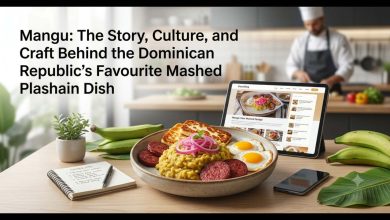
- Mangú (Dominican Republic): Made from boiled, rather than fried, plantains, giving it a smoother, milder flavor. It is usually served for breakfast alongside eggs, cheese, and salami.
- Fufú de plátano and machuquillo (Cuba): Cuban interpretations that share mofongo’s plantain base but differ in preparation and seasoning.
- Bolón de verde (Ecuador): Often stuffed with cheese or chicharrón, similar in concept to mofongo relleno but with its own regional character.
- Cayeye (Colombia): Made with green plantains sautéed with onions, garlic, and butter rather than pounded in a mortar.
While these dishes share a common ancestry rooted in African culinary techniques brought to the Americas, mofongo’s frying step and its use of a pilón for pounding give it a texture and flavor that is distinctly its own.
How Mofongo Is Traditionally Served and Enjoyed
Mofongo rarely appears on a table alone. It is most commonly paired with a side of broth, whether chicken, beef, or seafood based, which diners spoon over the mash or use for dipping bite by bite. This pairing does more than add flavor; it also balances out the density of the plantain, since mofongo on its own can feel quite heavy.
In many households, mofongo shows up during special occasions and family gatherings rather than as an everyday meal, partly because of how labor-intensive it is to prepare properly. It has also found its way into American holiday tables, where some Puerto Rican families incorporate mofongo into their Thanksgiving spread, sometimes using it in place of traditional bread stuffing.
Whether served as a simple side dish or dressed up as a stuffed centerpiece with shrimp or steak, mofongo tends to bring people together, often eaten family-style with everyone digging into a shared bowl or platter.
Tips for Enjoying or Recreating Authentic Mofongo
For anyone hoping to try making mofongo at home, or simply looking for what to expect from a well-prepared version at a restaurant, a few details separate an average plate from an excellent one:
- Look for plantains that are genuinely green and firm, not starting to yellow, since ripeness changes the texture dramatically.
- Fresh garlic, not powder or pre-minced jars, makes a noticeable difference in the final flavor.
- The fat used for mashing should be good quality, since it carries much of the dish’s richness.
- A properly textured mofongo should hold its shape but still feel moist inside, not dry or crumbly.
- Serving it warm, ideally straight from the pilón or pan, matters more than people expect. Mofongo loses much of its appeal once it cools and firms up too much.
These small details reflect why mofongo, despite its short ingredient list, is considered a dish that takes genuine skill to get right.
Final Thoughts
Mofongo is far more than mashed plantain. It is a dish shaped by centuries of history, carrying African, Taíno, and Spanish influence in every mound that reaches the table. From its origins in plantation kitchens to its place today on menus across Puerto Rico and beyond, mofongo has remained remarkably consistent in spirit even as cooks continue to reinvent it with seafood, stuffing, and creative twists.
For readers exploring Caribbean and Latin American food culture through Reuterings, mofongo is a great example of how a dish born out of necessity and limited ingredients can grow into a symbol of cultural pride and culinary skill. Whether you encounter it as a simple side dish, a seafood-stuffed centerpiece, or a bite-sized appetizer, mofongo remains one of the most flavorful and meaningful dishes to come out of Puerto Rican kitchens, well worth seeking out wherever authentic Caribbean cooking is served.