
UVLack Explained: The Complete Guide to UV-Curable Lacquer, Its Benefits, and Why Industries Can’t Get Enough of It
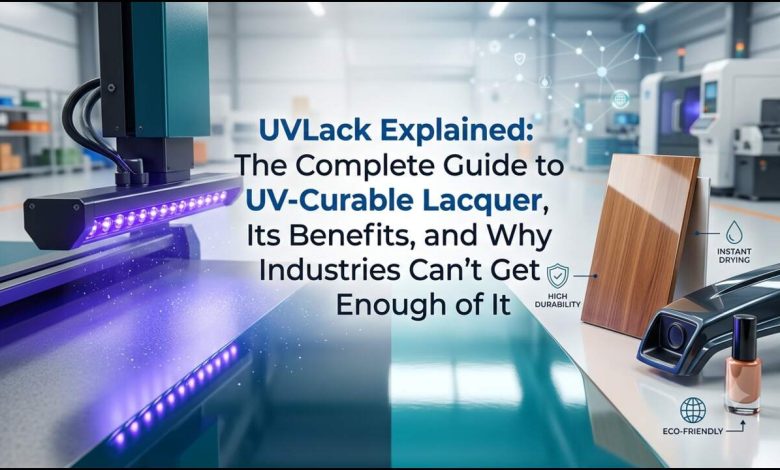
Run your finger across the surface of a luxury perfume box or a high-end product brochure, and you’ll probably notice something that smooth, almost glassy finish that feels more refined than ordinary printed material. There’s a good chance you’ve just touched uvlack in action.
It’s one of those materials that shapes everyday products without most people ever knowing its name. Yet for manufacturers, packaging designers, furniture producers, and automotive engineers, uvlack sits at the heart of modern surface finishing. And in 2026, as industries push harder for faster production, better durability, and cleaner environmental credentials, the relevance of this technology has never been stronger.
This guide covers everything you need to know what uvlack actually is, the science behind how it cures, the industries relying on it, how it stacks up against traditional coatings, and where the technology is heading next.
What Is UVLack? Definition, Origin, and Core Concept
The word itself is a combination of two terms: “UV,” referring to ultraviolet light, and “Lack,” which comes from the German word for lacquer or varnish. Put them together, and you get a succinct description of what this coating does: it’s a lacquer that cures under ultraviolet light.
More formally, uvlack often written as UV lacquer or UV varnish is a liquid surface coating that remains in its liquid state until the moment ultraviolet light is applied. That exposure triggers an almost instantaneous chemical reaction, converting the coating from a wet film into a hardened, durable, and visually striking protective layer in seconds, not hours.
This is the fundamental difference that separates uvlack from conventional coatings. Where traditional lacquers rely on air drying, solvent evaporation, or heat to harden, UV-curable systems activate through a precise photochemical process that is faster, more controllable, and increasingly cleaner from an environmental standpoint.
For manufacturers, that speed is transformational. For designers, the finish quality speaks for itself.
The Science Behind UVLack: How Photopolymerization Works
Understanding why uvlack performs the way it does requires a brief look at the chemistry involved. The process is called photopolymerization, and it’s more elegant than it might sound.
The Key Ingredients
A standard uvlack formulation contains several core components:
- Photoinitiations: These are the trigger compounds. When ultraviolet light hits them, they absorb the energy and break down into reactive chemical species (typically free radicals or cations).
- Oligomers: These define the physical characteristics of the final coating, including hardness, flexibility, and chemical resistance. Think of them as the backbone of the cured film.
- Reactive monomers: These dilute the mixture to the right viscosity for application and participate in the polymerization reaction itself.
- Additives: Pigments, stabilizers, matting agents, and performance enhancers are blended in depending on whether the final finish should be glossy, matte, satin, or something more functional (such as anti-scratch or anti-fingerprint).
The Curing Process Step by Step
- The liquid coating is applied to the substrate paper, wood, plastic, metal, or another compatible surface.
- The coated surface passes under a UV light source, typically a mercury vapour lamp or, increasingly, an LED-UV system.
- The photoinitiations absorb the ultraviolet energy and generate reactive species.
- These species trigger rapid polymerization, linking the monomers and oligomers into a dense, cross-linked polymer network.
- Within seconds, the liquid film becomes a solid, hardened surface coating.
The speed of this reaction isn’t just convenient it’s also what produces such consistently high-quality results. Because the coating hardens almost instantly, there’s very little opportunity for dust contamination, uneven texture, or surface defects that can plague slower-drying conventional systems.
Key Benefits of UVLack Coatings
The adoption of UV-curable lacquer across such a broad range of industries isn’t accidental. The technology offers a set of practical advantages that address real production and product quality challenges.
1. Exceptionally Fast Curing
Where solvent-based or water-based coatings might take anywhere from minutes to hours (or even days, in some wood finishing applications) to dry fully, uvlack cures in a matter of seconds. This dramatically accelerates production throughput, reduces the footprint of drying facilities, and allows coated products to be handled, stacked, and packaged almost immediately.
For high-volume printing and packaging operations, this alone represents a significant commercial advantage.
2. Superior Surface Durability
Once cured, the cross-linked polymer network that uvlack creates is genuinely tough. It resists scratches, abrasion, moisture, and many common chemicals at a level that conventional air-dried lacquers struggle to match. Products coated with UV lacquer tend to stay looking better for longer an advantage that matters enormously in retail environments where shelf presence is tied directly to sales.
3. Aesthetic Versatility
UVLack isn’t a one-finish solution. Formulators can engineer it to produce a spectrum of surface appearances from an almost mirror-like high gloss to a smooth, tactile matte and anywhere in between. This flexibility makes it useful across luxury packaging (where gloss signals premium quality), furniture (where matte or satin finishes are often preferred), and printed materials (where spot UV techniques create striking design contrasts).
4. Reduced VOC Emissions
Volatile organic compounds are a serious environmental and occupational health concern in many coating operations. Traditional solvent-based lacquers release significant quantities of VOCs during the drying process. UV-curable systems, by contrast, typically contain far fewer solvents and produce substantially lower emissions during curing. For manufacturers working under increasingly strict environmental regulations particularly across the UK and EU this matters.
5. Energy Efficiency
Because the curing process is triggered by UV light rather than sustained heat, uvlack systems generally consume less energy than heat-based drying ovens. This contributes to lower operating costs and a smaller carbon footprint per unit of production.
6. Consistency and Quality Control
UV curing is highly controllable. Once a production line is calibrated, the curing conditions light intensity, exposure time, coating thickness can be replicated with precision across every unit. This consistency reduces waste, rework, and the variability that can undermine quality in manually managed drying processes.
UVLack in Action: Real-World Industry Applications
The technology has found a home in an impressive range of sectors. Here’s how it performs across some of the most significant.
Printing and Packaging
This is where uvlack sees its highest volume of use, and for good reason. Labels, folding cartons, luxury boxes, book covers, magazine covers, brochures, and business cards all benefit from UV coating. The finish enhances colour saturation, increases resistance to handling wear, and raises the perceived premium quality of the product.
Spot UV where a gloss coating is applied selectively to specific design elements such as a logo or headline, while the surrounding surface remains matte is a particularly popular technique. The tactile contrast draws attention exactly where the designer intends and adds a physical dimension that flat printing simply cannot replicate.
Furniture and Wood Surfaces
Cabinet manufacturers, flooring producers, and decorative panel makers rely heavily on UV-cured lacquer. Applied to wood surfaces, uvlack provides moisture resistance and abrasion protection without clouding the clarity of the wood grain beneath. The instant curing is especially valuable in high-volume flat-panel furniture production, where waiting hours for lacquer to dry would create an impossible bottleneck.
The finish is also extremely durable a meaningful benefit in flooring and work surfaces that take daily punishment.
Automotive Components
Inside modern vehicles, uvlack protects interior plastic components such as dashboards, centre console trims, door panels, and control surfaces. These parts need to withstand constant contact from hands, exposure to sunlight, temperature swings, and the occasional cleaning product. UV-cured coatings handle all of this while maintaining their appearance over the vehicle’s lifespan.
Electronics and Consumer Products
Device casings, screen bezels, accessories, and consumer electronics housings are routinely finished with UV lacquer to provide scratch resistance and a clean aesthetic. Given how much these products are handled on a daily basis, the durability advantage is immediately practical.
Industrial and Metal Applications
Metal panels, structural components, and industrial parts also benefit from uvlack’s corrosion resistance and surface protection. In environments where surfaces are exposed to moisture or chemical contact, the sealed, cross-linked polymer layer provides meaningful protection that extends component life.
UVLack vs Traditional Coatings: An Honest Comparison
It would be misleading to suggest uvlack is universally superior to all conventional coatings in every situation. The honest answer is more nuanced.
The upfront capital investment in UV curing equipment lamps, LED systems, conveyor setups can be significant. For smaller operations or productions involving very complex three-dimensional shapes (where ensuring uniform UV exposure is difficult), traditional systems may still be the more practical choice.
But at commercial production scale, the economics generally favour uvlack. Reduced energy consumption, faster throughput, lower waste, and reduced maintenance on finishing equipment typically deliver a strong return on investment over time.
Choosing the Right Type of UVLack for Your Application
Not all UV coatings are formulated the same way, and selecting the right one matters.
Gloss UVLack
The most widely used finish. Produces a reflective, high-shine surface that intensifies colour and creates a premium visual impression. Ideal for packaging, printed materials, and anywhere strong shelf presence is a commercial priority.
Matte UVLack
Provides a smooth, non-reflective surface with a soft tactile quality. Popular in furniture, high-end stationery, and design-led packaging where subtlety and sophistication are the goal. Matte finishes also tend to conceal fingerprints more effectively than gloss.
Satin UVLack
A middle ground between gloss and matte moderate sheen with practical durability. Often used in automotive interiors and furniture where a natural appearance is preferred without full gloss.
Soft-Touch / Textured UV Coatings
Specialist formulations that produce a velvety or textured surface feel. These are particularly valued in luxury packaging and cosmetics, where tactile experience is part of the brand statement.
Spot UV
A technique rather than a product type spot UV applies a gloss coating selectively over specific design elements. The contrast between coated and uncoated areas creates visual and tactile interest that standard full-coverage printing cannot achieve.
Environmental Credentials: Is UVLack Genuinely Sustainable?
This is a legitimate question, and the answer is encouraging with some caveats.
On the positive side, most uvlack formulations contain significantly lower levels of solvents than traditional coating systems, which means fewer VOC emissions during application and curing. The near-instant curing process also reduces energy consumption compared to large drying ovens that run continuously during production shifts.
The durability of UV-cured coatings is itself an environmental benefit. Products that last longer without needing repair, recoating, or replacement generate less waste and fewer replacement materials over their lifespan.
The area requiring more careful attention involves photoinitiations and other chemical components in the formulation. Responsible handling, storage, and disposal practices are essential, and not all formulations are equal in their environmental profile.
The direction of innovation is clearly towards greener solutions. Researchers are actively developing bio-based UV resins derived from renewable rather than petroleum-sourced materials. LED-UV curing systems, which are increasingly replacing traditional mercury vapour lamps, consume significantly less energy, generate less heat, and eliminate the environmental concerns associated with mercury disposal.
The overall trajectory is positive, and manufacturers selecting uvlack today are generally choosing a more sustainable option than the solvent-based alternatives they might otherwise use.
The Future of UVLack Technology
Several emerging developments are likely to shape how this technology evolves over the next decade.
UV-LED Curing Systems: Are already well established and continuing to improve. They offer longer operational lifespans, more targeted wavelengths, instant on/off capability (mercury lamps need warm-up time), and greater energy efficiency than conventional lamp systems. Adoption rates are accelerating.
Nano-Enhanced Formulations: Incorporate nanoparticles into the coating matrix to improve specific performance characteristics higher scratch resistance, better optical clarity, antimicrobial properties, and even self-healing capabilities where minor surface damage repairs itself when exposed to heat or UV light.
Bio-Based UV Resins: Are moving from research towards commercial availability, reducing dependence on petrochemical feedstocks and improving the sustainability profile of UV coatings as a whole.
Smart Coatings: Represent a more speculative but genuinely exciting frontier coatings that change colour, transparency, or physical properties in response to UV exposure, temperature, or environmental conditions. Some research is exploring integration with IoT sensors that could indicate when a protective coating has degraded past its effective threshold.
For manufacturers and designers specifying surface finishes today, these trends suggest that the long-term investment case for UV curing technology is strong and likely to strengthen further.
Practical Tips for Working With UVLack
If you’re considering uvlack for a production process or a specific project, a few practical points are worth keeping in mind:
- Surface preparation matters. Even the best UV coating won’t perform well on a contaminated or improperly primed substrate. Ensure the surface is clean, dry, and compatible with the coating formulation you’re using.
- Test for substrate compatibility. While uvlack works across a wide range of materials paper, board, plastic, wood, metal adhesion varies. Always conduct adhesion tests before committing to a full production run.
- Ensure full UV exposure. Shadows and recessed areas on complex three-dimensional shapes can result in incomplete curing. If you’re coating irregular surfaces, discuss lamp positioning and conveyor design with your equipment supplier.
- Consider the full formulation. The photoinitiated system, resin chemistry, and any additives all influence the final result. Work with an experienced supplier to select a formulation designed for your substrate, finish type, and production environment.
- Factor in equipment maintenance. UV lamps particularly mercury vapour systems degrade over time and need regular monitoring and replacement. LED systems have longer operational lives but still require periodic calibration.
Frequently Asked Questions About UVLack
What exactly is uvlack? UVLack is a UV-curable lacquer or varnish a liquid surface coating that hardens almost instantly when exposed to ultraviolet light. The name combines “UV” (ultraviolet) and “Lack,” the German word for lacquer. It’s used across printing, packaging, furniture, automotive, and electronics manufacturing to protect surfaces and enhance their appearance.
How is uvlack different from ordinary varnish? Conventional varnishes dry through solvent evaporation, air curing, or heat. UVLack cures through a photochemical process exposure to UV light triggers a reaction that solidifies the coating in seconds. This gives it significant advantages in speed, durability, and environmental performance.
Is uvlack safe to use? When handled correctly with appropriate protective equipment, uvlack is safe for industrial use. The formulation contains photoinitiations and reactive chemicals that require responsible handling, but UV-cured coatings produce significantly lower VOC emissions than many solvent-based alternatives, which improves workplace air quality.
What surfaces can uvlack be applied to? UVLack is compatible with a wide range of substrates including paper, cardboard, wood, metal, plastic, and glass. Adhesion characteristics vary by substrate, so compatibility testing before full-scale production is always advisable.
What finishes does uvlack come in? The most common options are high gloss, matte, and satin. Specialty formulations include soft-touch, textured, anti-fingerprint, and spot UV (selective coating for design contrast). Each finish can be tailored to specific performance requirements.
Is uvlack environmentally friendly? Compared to solvent-based coatings, most uvlack formulations produce fewer VOC emissions and consume less energy during curing. The durability of the cured coating also reduces the need for recoating or replacement over time. Newer bio-based formulations and LED-UV curing systems are further improving the environmental profile of the technology.
What industries use uvlack most widely? Printing and packaging see the highest volumes of use, followed by furniture and wood finishing, automotive interior components, electronics, and consumer goods manufacturing.
What are the main limitations of uvlack? The initial investment in UV curing equipment can be substantial. Ensuring full UV exposure on complex three-dimensional or shadowed surfaces can be challenging. And while the technology is highly effective on a wide range of substrates, not every material or application is a good fit. Some formulations also require careful handling during disposal.
Conclusion: Why UVLack Is Worth Understanding
Whether you’re a packaging designer, a furniture manufacturer, an automotive supplier, or simply someone curious about the surfaces around them, uvlack is a technology that quietly shapes the quality and longevity of countless products in daily life.
Its combination of instant curing, genuine durability, aesthetic flexibility, and improving environmental credentials explains why adoption has grown steadily across so many sectors and why that growth shows no sign of slowing. The move towards LED-UV systems, bio-based resins, and nano-enhanced formulations suggests a technology still very much in its productive prime, rather than one approaching obsolescence.
If you’re evaluating surface finishing options for a production process, uvlack deserves serious consideration not just for what it does to a product’s appearance, but for what it does to your production efficiency and long-term sustainability credentials.
The best starting point is a conversation with a reputable UV coating supplier who can match a formulation to your specific substrate, application method, and performance requirements. Get that right, and the technology tends to deliver on its promise.